What Are the 2026 Top Hotel Electronic Locks for Buyers?
Choosing the 2026 top Hotel Electronic Locks requires more than comparing sleek designs and advertised features. Buyers should examine real operating conditions, including guest turnover, network reliability, battery changes, and emergency access. A lock may look impressive in a showroom. It may struggle on a busy hotel corridor.
Security technologist Bruce Schneier offers a useful principle: “Security is a process, not a product.” This idea matters when evaluating hotel access systems. The strongest options should support encrypted RFID or NFC credentials, mobile entry, detailed audit trails, and dependable offline operation. They should also connect smoothly with property management systems. Fire safety, accessibility, maintenance support, and privacy controls deserve equal attention.
Hands-on testing remains essential. Ask suppliers to demonstrate a low-battery warning, failed network response, lost-card cancellation, and emergency override. Watch how quickly staff can resolve each event. Small delays become frustrating at midnight.
No ranking is perfect. A luxury resort may value smartphone access, while a smaller hotel may prefer simple RFID cards and lower service costs. I may favor integration too heavily, because operational simplicity sometimes matters more than advanced features. Buyers should compare total ownership costs, not only purchase prices. The right choice balances security, guest convenience, staff training, and long-term reliability. That balance defines the most practical Hotel Electronic Locks for 2026.
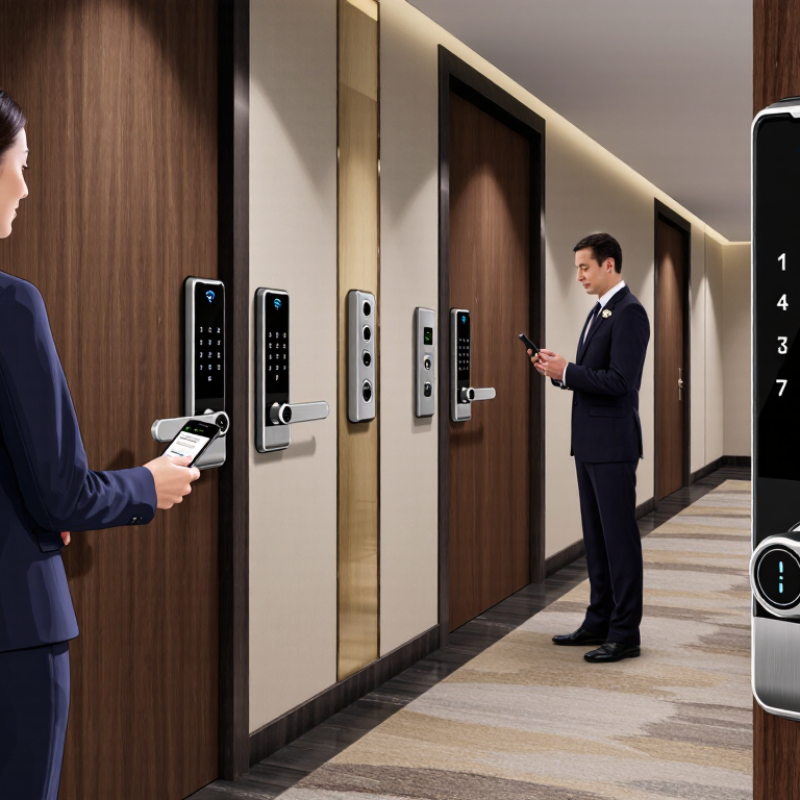
What Hotel Electronic Locks Are and How They Work in 2026
What Are the 2026 Top Hotel Electronic Locks for Buyers?
Hotel electronic locks are access systems that replace, or support, traditional metal keys. In 2026, common options include RFID cards, mobile credentials, keypad codes, and hybrid locks. Each system reads an approved credential before releasing the latch. The decision should match the property’s guest habits, staff skills, and network quality.
RFID locks work when a guest taps a card near the reader. Mobile locks use Bluetooth or NFC through a secure hotel application. Keypad models accept temporary codes and can reduce card replacement work. Hybrid models combine cards, phones, and mechanical backup access. This flexibility helps during a dead phone battery or an unreliable connection.
The lock controller checks permissions, records entry events, and powers a small motor. Many systems can operate offline, then synchronize records when connectivity returns. That detail matters in older buildings with weak wireless coverage. Battery alerts should reach both staff and management, not only one device. From practical installation experience, door alignment often causes more trouble than the software. It deserves careful testing.
Strong encryption, role-based administration, and regular firmware updates improve security. However, no electronic lock is completely failure-proof. Guests may lose phones, forget codes, or misunderstand access instructions. Staff still need a tested emergency procedure and physical inspection routine. Buyers should compare installation depth, battery life, audit functions, accessibility, and maintenance support before choosing a system.
Which Electronic Lock Technologies Are Leading Hotel Security
What Are the 2026 Top Hotel Electronic Locks for Buyers?
Which Electronic Lock Technologies Are Leading Hotel Security
Hotel security is shifting from standalone card readers to connected access platforms. Mobile credentials, Bluetooth Low Energy, and near-field communication are gaining attention. Grand View Research reported that the global smart locks market reached about $2.73 billion in 2023. It also projects a 19.6% compound annual growth rate through 2030. That growth reflects stronger demand for remote management and flexible guest access.
Cloud-managed locks now let authorized staff issue, change, or cancel credentials quickly. Managers can review entry records without visiting every guestroom. However, cloud dependence creates an uncomfortable question.
What happens during an internet outage?
Strong systems should support encrypted offline access, local event storage, and automatic synchronization after reconnection. This practical fallback still matters in busy properties.
Credential security deserves equal attention. Verizon’s 2024 Data Breach Investigations Report identified compromised credentials as a major breach pathway. Hotel operators should therefore evaluate passkeys, device-bound credentials, and multi-factor administration.
Biometric readers may improve convenience in staff-only areas, but privacy, hygiene, and enrollment accuracy remain concerns. I would not call biometrics a universal winner.
RFID cards remain useful, especially where guests prefer simple access. Yet lost cards, shared credentials, and weak backend controls can undermine any lock technology.
Buyers should test battery alerts, audit logs, emergency access, encryption, and system integration before approving a 2026 deployment.
How to Compare the Best Hotel Electronic Locks for Buyers
Comparing the best hotel electronic locks requires more than checking appearance or price. Buyers should examine how each lock performs during daily guest turnover, staff access, and unexpected power problems. A practical evaluation starts with credential options, such as mobile keys, PIN codes, cards, or secure emergency credentials. Test it first. The unlocking response should remain quick at a busy front desk and quiet near sleeping guests.
Battery life deserves close attention. Ask for measured results under realistic use, not only laboratory claims. Review low-battery warnings, replacement time, and mechanical backup access. Audit records should show who entered, when, and which credential was used. This supports internal investigations and improves operational accountability. The system should also connect reliably with property-management software, while preserving access control during network interruptions. Details matter.
During a hotel retrofit, installation time can affect room availability more than the lock’s purchase price. Compare door compatibility, drilling requirements, maintenance tools, warranty terms, and training support. Check resistance to humidity, repeated impact, and cleaning chemicals in bathrooms and coastal properties. Confirm that emergency egress, accessibility, fire-safety, and privacy requirements are addressed by qualified local professionals. A perfect lock does not exist. Some advanced systems add useful features but create more setup work for staff. Buyers should request a live demonstration, inspect several installed units, and calculate total ownership costs over five years instead of trusting a polished sales sheet.
How to Plan Installation, Integration, and Ongoing Maintenance
Choosing a 2026 hotel electronic lock should begin with the property, not a feature list. Survey every door, frame, hinge, and power source before ordering hardware. Older doors often need reinforcement, while fire-rated doors may require approved fitting methods. Record room type, corridor location, guest volume, and exposure to humidity. Measure twice. A practical selection may combine RFID or NFC entry, mobile credentials, audit trails, and a protected emergency override. Confirm battery life under real traffic, not only laboratory claims.
Installation works best in a pilot block of ten to twenty rooms. Technicians can test latch alignment, read range, door closing speed, and battery access without disrupting the whole hotel. Connect the lock platform to the property-management system through documented interfaces. Map room numbers carefully; one incorrect mapping can send a guest to the wrong door. Test reservations, room changes, checkout events, staff access, and offline operation. Use least privilege. Integration can fail at the handoff between systems, so assign one owner for logs, permissions, privacy controls, and incident review.
Ongoing maintenance needs a visible calendar. Inspect latches and strike plates monthly, review access logs weekly, and replace batteries by measured condition and risk level. Train housekeeping and front-desk teams to report loose handles, delayed locking, or repeated denied entries. Keep spare batteries, tested tools, and a documented recovery kit nearby. Do not ignore small faults. A lock may pass a morning test yet fail after heavy evening traffic. Review performance quarterly, including guest feedback, support response times, and unsuccessful entry attempts. The first maintenance plan is rarely perfect.

