
7 Best SUS304L Stainless Plates Suppliers for Global Buyers?

Choosing the right Sus304l Stainless Plates supplier is not simply a price comparison. Global buyers must examine material consistency, documentation, production capability, and after-sales reliability. A polished website can hide weak quality control. The steel must perform beyond the sales conversation.

As stainless-steel author J.R. Davis observed, “Material selection must begin with service conditions, not price.” That principle remains practical for SUS304L buyers. Plate performance depends on chemical composition, thickness tolerance, surface finish, heat treatment, and welding requirements. Reliable suppliers should provide mill test certificates, traceability records, PMI reports, and clear references to ASTM, EN, or JIS standards. Certificates matter.

A serious evaluation also considers cutting accuracy, edge protection, export packaging, lead times, and communication across time zones. Inspectors may check plate markings, surface scratches, dimensions, and certificate details before shipment. Even small discrepancies can create costly fabrication delays.

This guide reviews seven suppliers serving international buyers of Sus304l Stainless Plates. It compares their manufacturing strength, product range, quality systems, customization options, and delivery experience. The ranking is not absolute. A supplier suited to pressure equipment may not suit decorative fabrication or marine components. That is the difficult part.

Buyers should request current test records and clarify project specifications before placing an order. Supplier claims deserve verification. A lower quotation may reflect thinner tolerances, limited inspection, or weaker packaging. Careful questions reveal more than attractive brochures.
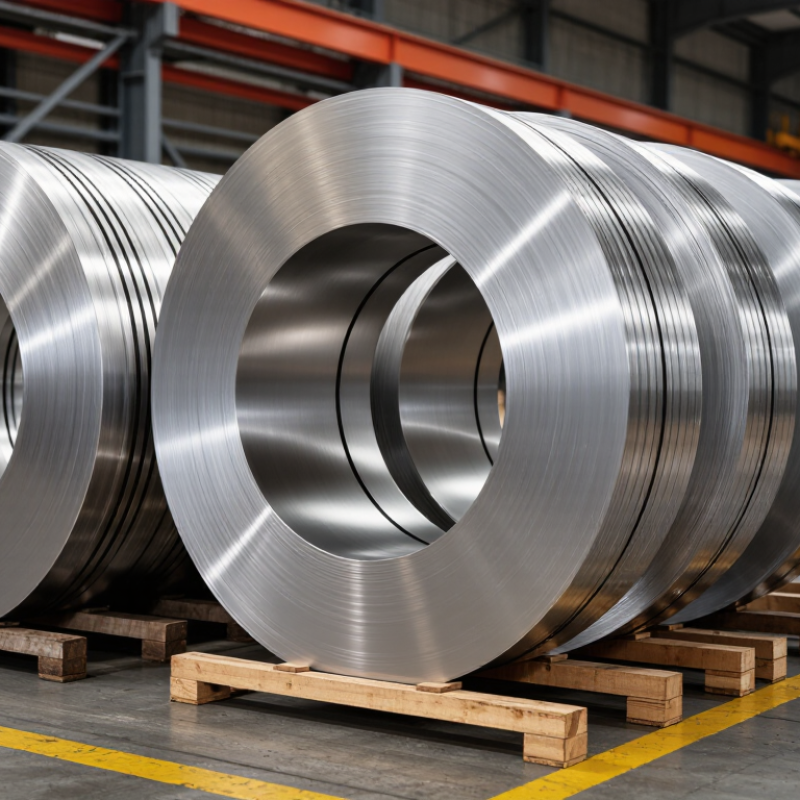
7 Best SUS304L Stainless Plates Suppliers for Global Buyers?

SUS304L Plate Basics: ASTM A240, C≤0.03%, Cr 18–20%, and Ni 8–12%

SUS304L stainless plate is a low-carbon austenitic grade commonly specified under ASTM A240. Its carbon content is limited to C≤0.03%, reducing the risk of carbide precipitation after welding. Chromium usually ranges from 18–20%, while nickel remains around 8–12%. These elements support corrosion resistance, formability, and stable performance in fabricated equipment.

For global buyers, supplier evaluation should begin with traceable material records. Request a mill test certificate showing chemical composition, tensile strength, yield strength, elongation, thickness, and heat number. The heat number should match the plate marking. Confirm whether the surface is 2B, No. 1, or another finish, because appearance and processing needs can differ greatly. Small details matter.

A reliable supplier should also support independent inspection, PMI testing, dimensional checks, and export packing. Salt exposure, humidity, and long sea journeys can damage poorly protected plates. Wooden supports, sealed wrapping, and clear labels are practical safeguards. Do not rely on a certificate alone. A certificate can contain errors, or describe a different batch. That uncomfortable possibility deserves attention. Compare the stated ASTM A240 requirements with test results, purchase terms, and inspection evidence. Also check whether the plate is actually SUS304L, not standard SUS304, especially when welding quality and post-fabrication corrosion resistance are important. Datasheets help, but verified records carry more weight.

How to Evaluate SUS304L Suppliers by EN 10088-2 and ASTM A240 Compliance

For global buyers, SUS304L supplier evaluation should begin with documents, not polished photographs. SUS304L usually aligns with 1.4307 and UNS S30403, but equivalence must be verified. Request a mill-issued certificate showing heat number, chemical composition, tensile strength, yield strength, elongation, dimensions, and surface finish. EN 10088-2 focuses on stainless steel product conditions, tolerances, and delivery requirements. ASTM A240 covers stainless plate, sheet, and strip requirements. The certificate must name the exact standard edition.

Look closely.

A credible supplier should provide EN 10204 3.1 inspection documents and maintain heat-level traceability. Compare carbon content, chromium, nickel, and nitrogen values against the declared grade. Then check actual mechanical results, not only “meets specification.” ASTM A240 compliance can fail through incorrect thickness tolerances or incomplete testing. EN 10088-2 compliance can also be misrepresented when a supplier quotes only the material grade.

Industry scale makes this control important. International Stainless Steel Forum statistics reported global stainless crude steel production of about 58.4 million tonnes in 2023. The U.S. Geological Survey estimated global mined nickel output at 3.6 million tonnes that year. These figures suggest a large, price-sensitive supply chain, but not uniform quality. Ask for recent third-party audits, calibration records, and sample testing before approving volume orders. I would not rely on a certificate alone. Some procurement teams do, and that is a weakness. Supplier claims should survive independent verification, especially for corrosion-sensitive or pressure-related applications.

SUS304L Supplier Evaluation: EN 10088-2 vs ASTM A240 Chemistry Limits

Maximum specified element limits for SUS304L / 1.4307 stainless steel, expressed as weight percentage. Use these values when checking supplier mill test certificates.

A qualified supplier should provide traceable chemical and mechanical test results that meet the applicable standard edition. Chromium and nickel values shown are upper limits; confirm the complete required range, thickness, surface finish, heat treatment, and inspection documentation before approval.

Seven Global SUS304L Plate Suppliers Compared by Capacity, Certifications, and Markets

Seven Global SUS304L Plate Suppliers Compared by Capacity, Certifications, and Markets

The seven supplier profiles show a clear split between integrated mills, regional processors, and export-focused stockists. Large producers usually offer wider thickness ranges, stronger monthly capacity, and stable heat-to-heat traceability. Smaller suppliers may respond faster, especially for cut-to-size orders. Capacity alone does not guarantee dependable delivery.

Certification records deserve careful checking. Look for ISO 9001 systems, EN 10204 3.1 inspection documents, and test reports matching ASTM or EN requirements. Experienced buyers should verify chemical composition, tensile strength, surface finish, and ultrasonic testing options. Export markets also reveal useful differences. Some suppliers serve food-processing and pharmaceutical projects, while others focus on construction, marine equipment, or pressure-related fabrication.

Tips: Request recent mill certificates, production lead times, packing photographs, and references from your target region. Confirm whether the plate is mill-produced or processed from imported coil. A polished certificate list is not proof of consistent quality. I would not automatically choose the largest supplier. Public comparisons rarely show rejection rates, claim handling, or how quickly technical teams respond. That missing evidence deserves attention. Sample testing, independent inspection, and a small trial order can expose practical weaknesses before a larger shipment.

7 Best SUS304L Stainless Plates Suppliers for Global Buyers?

Seven Global SUS304L Plate Suppliers Compared by Capacity, Certifications, and Markets

Supplier Profile Indicative Annual Plate Capacity SUS304L Plate Offering Applicable Standards and Technical Documents Certifications and Quality Documentation Primary Export Markets Typical Commercial Lead Time
Supplier A
Large integrated stainless producer
100,000+ metric tons
Broad mill and finishing capability
Hot-rolled and cold-rolled SUS304L plates
Thickness range commonly available: 3–100 mm
2B, No.1, BA, brushed and polished finishes
ASTM A240/A240M
EN 10088-2
JIS G4304/G4305
Chemical composition and mechanical test reports
ISO 9001 ISO 14001 MTC EN 10204 3.1 PMI available East Asia, Southeast Asia, Europe, Middle East, North America 20–45 days, depending on size and finish
Supplier B
High-volume export mill
50,000–100,000 metric tons
Strong standard-size inventory
SUS304L hot-rolled plates and cut-to-size sheets
Typical thickness: 4–80 mm
Mill edge and trimmed edge options
ASTM A240/A240M
ASME SA-240
EN 10088-2
JIS and GB/T equivalents available by order
ISO 9001 EN 10204 3.1 Ultrasonic testing Third-party inspection Southeast Asia, South Asia, Africa, Middle East, South America 15–35 days for regular specifications
Supplier C
Specialty plate and project supplier
25,000–50,000 metric tons
Flexible production for engineered orders
Heavy SUS304L plates and pressure-equipment grades
Thickness commonly supplied: 6–150 mm
Solution annealed and pickled finishes
ASTM A240/A240M
ASME SA-240
EN 10028-7 where applicable
Project-specific inspection plans
ISO 9001 PED support documents MTC EN 10204 3.1/3.2 UT testing Europe, Gulf countries, India, Southeast Asia, shipbuilding markets 30–60 days for heavy or custom plates
Supplier D
Integrated flat-product manufacturer
25,000–50,000 metric tons
Balanced domestic and export allocation
Cold-rolled and hot-rolled SUS304L plates
Typical thickness: 2–60 mm
Brushed, hairline, mirror and decorative finishes
ASTM A240/A240M
EN 10088-2
JIS G4304
Surface-finish inspection records
ISO 9001 ISO 14001 RoHS documentation Surface inspection East Asia, Australia, Europe, Middle East, North America 20–40 days; stocked items may ship sooner
Supplier E
Stainless service-center and stockist network
10,000–25,000 metric tons
Inventory-led supply model
Standard SUS304L plates, sheets and cut pieces
Common thickness: 3–50 mm
Laser, plasma and water-jet cutting available
ASTM A240/A240M
EN 10088-2
JIS G4304/G4305
Dimensional and flatness reports
ISO 9001 EN 10204 3.1 Cutting traceability Pre-shipment inspection Europe, North Africa, Middle East, Central Asia 7–30 days for stock or cut-to-size orders
Supplier F
Cost-focused export manufacturer
10,000–25,000 metric tons
Competitive batch production
SUS304L hot-rolled plates and industrial sheets
Typical thickness: 4–100 mm
No.1 and 2B finishes; custom packing available
ASTM A240/A240M
EN 10088-2
GB/T 4237
Heat-number traceability and test certificates
ISO 9001 MTC EN 10204 3.1 Chemical analysis Mechanical testing South Asia, Africa, Latin America, Southeast Asia 18–40 days, subject to production schedule
Supplier G
Small-batch and customized plate supplier
Below 10,000 metric tons
High flexibility for non-standard orders
SUS304L plates for food-processing, architectural and general fabrication use
Typical thickness: 2–50 mm
Custom dimensions, edge preparation and surface finishing
ASTM A240/A240M
EN 10088-2
JIS G4304
Customer-approved drawings and inspection plans
ISO 9001 EN 10204 3.1 PMI on request Third-party inspection Southeast Asia, Oceania, Africa, Middle East, selected European buyers 25–55 days for customized specifications

Buyer verification note: Capacity bands, certifications, available dimensions, delivery schedules and market coverage can change by production site and order period. Buyers should verify the supplier’s current certificates, heat-number traceability, chemical composition, mechanical properties, surface condition and inspection scope before placing an order.

SUS304L Quality Metrics: Thickness Tolerance, Surface Finish, MTCs, and Testing

For global buyers, SUS304L plate quality starts with a measurable thickness record. ASTM A480/A480M states that tolerance depends on nominal thickness, product width, and ordering conditions. A supplier should therefore provide the applicable tolerance table, not claim a blanket ±0.10 mm. Ask for readings from the center, edges, and four corners. A clean certificate can still hide a poor edge.

Surface finish also needs precise language. “2B” describes a production route, not a guaranteed roughness value. Industry mill data commonly places 2B roughness near Ra 0.3–0.8 μm, but polishing, inspection direction, and sampling can change results. Require the finish designation, roughness target, inspection method, and sample location. DIN EN 10088-2 provides useful product and surface-condition references. Do not accept “bright finish” without a measurable specification.

The MTC should identify the heat number, plate dimensions, chemical composition, tensile results, and delivery condition. Under EN 10204, a 3.1 certificate links test results to the supplied heat and is issued through the manufacturer’s authorized inspection process. For SUS304L, carbon should generally remain at or below 0.030%, subject to the purchase standard. Tensile testing can follow ISO 6892-1, while portable PMI offers rapid alloy screening. PMI is helpful, but it does not replace laboratory chemistry. One overlooked weakness remains: many buyers verify paperwork carefully, yet inspect too few plates. Sampling deserves more attention.

How Global Buyers Compare MOQ, Lead Time, Incoterms, and Total Landed Cost

7 Best SUS304L Stainless Plates Suppliers for Global Buyers

Comparing seven SUS304L stainless plate suppliers requires more than checking the lowest quoted price. Request the same specification from every candidate: thickness, width, finish, edge condition, and tolerance. Ask for heat numbers, mill test certificates, and recent inspection records. These documents show control over chemistry, mechanical properties, and traceability. Do not accept vague claims about “304L quality.” Ask for evidence.

MOQ can change the real buying decision. A supplier offering 20 tons may provide a lower unit price, but your project may need only six tons. Extra stock increases storage costs and ties up cash. Confirm whether mixed sizes, partial containers, or trial orders are possible. Lead time also needs careful checking. Separate production time from booking, port handling, and inland delivery. A quoted 15-day lead time may exclude several weeks of transit.

Incoterms must match your logistics experience and risk tolerance. Under FOB, you control the main freight, but you also manage booking and export coordination. Under CIF, freight is included, yet destination charges may remain unclear. Build a landed-cost sheet covering plate price, packaging, inspection, insurance, duties, port fees, currency movement, and final delivery. Numbers can mislead. A supplier with a higher quote may deliver faster and reduce downtime. Still, estimates are not guarantees. Recheck freight and duty assumptions before signing, especially when shipment size or destination changes.

Questions? Give Us A Call!