
Choosing the right storefront doors supplier requires more than comparing prices or browsing polished catalogues. Global buyers must examine system design, glass compatibility, thermal performance, hardware quality, and installation support. A door may look impressive in a showroom, yet perform poorly after exposure to wind, rain, heavy traffic, or careless fitting.
Tom Culp, a respected glass-industry consultant, offers a useful principle: “Performance depends on the whole opening, not glass alone.” His observation applies directly to storefront doors. Frames, seals, hinges, closers, thresholds, and drainage details must work together. One weak component can compromise the entire entrance.
This guide introduces ten suppliers serving international markets. It considers manufacturing experience, product range, customization, testing evidence, export capability, lead times, and after-sales communication. Some suppliers may excel in aluminium profiles but provide limited hardware choices. Others may offer attractive finishes while lacking clear technical documentation. That matters.
Reliable sourcing is rarely effortless. Buyers should request drawings, performance data, sample finishes, warranty terms, and installation instructions before placing large orders. Regional requirements also differ, so local consultants should verify accessibility, safety, energy, and weather-resistance expectations. The shortlist is useful, but it is not a final verdict. Supplier rankings can change as factories expand, certifications expire, or service quality declines.
The best storefront doors supplier is not always the cheapest. It is the partner that communicates clearly, documents honestly, and delivers a dependable entrance for real-world use.
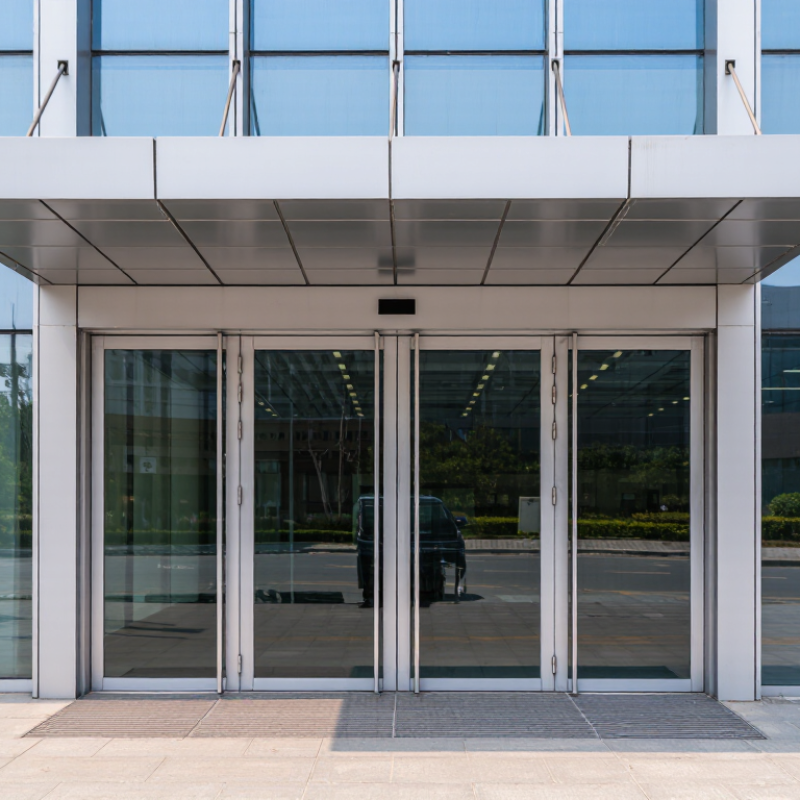
China Top 10 Storefront Doors Suppliers for Global Buyers
Market Overview of Storefront Door Suppliers in China
China’s storefront door market serves retail, hospitality, offices, and mixed-use developments worldwide. Suppliers commonly produce aluminum-framed glass doors, narrow-stile systems, steel doors, and thermally improved assemblies. Many factories offer custom sizes, powder-coated finishes, laminated glass, and coordinated hardware. In practical sourcing, quality depends on more than attractive drawings. Buyers should review extrusion thickness, corner joints, glass specifications, drainage paths, and seal performance. A reliable supplier can provide technical drawings, test records, installation guidance, and traceable production samples. However, catalogs can look more complete than actual factory capabilities.
Tips: Request a full-size sample corner. Check opening force, frame alignment, gasket fit, and surface consistency. Confirm packaging details before production.
The strongest suppliers usually maintain separate teams for engineering, quality control, and export documentation. Their experience appears in small details, such as protected glass edges and clearly labeled hardware bags. Global buyers should compare lead times, minimum order quantities, replacement support, and communication speed. Regional climate also matters. Coastal projects may require stronger corrosion protection, while colder areas need better thermal performance. Fire and accessibility requirements must be verified with local professionals before approval. Factory visits are useful, but one visit cannot prove every production batch. I have found that written inspection criteria prevent more disputes than friendly promises. Cost remains important, yet the cheapest quotation may hide thinner profiles, weaker fittings, or limited after-sales support.
Anonymized market benchmark based on commonly offered product configurations, export practices, and indicative China supplier ranges
| Market Position | Anonymous Supplier Profile | Main Storefront Door Systems | Common Frame Materials | Typical Door Sizes | Glass Configurations | Typical Performance and Compliance | Indicative MOQ | Typical Production Lead Time | Indicative FOB Range | Common Export Markets |
|---|---|---|---|---|---|---|---|---|---|---|
| 01 | Profile A Large-scale aluminum storefront manufacturer |
Single swing doors, double swing doors, narrow-stile entrances, thermally improved storefront systems | 6063-T5 or 6063-T6 extruded aluminum; anodized or powder-coated finishes | Single leaf: 800–1,200 mm wide × 2,100–2,400 mm high; double leaf: 1,500–2,400 mm wide | Tempered, laminated, insulated, low-E, and clear or tinted glazing | Options commonly specified to ASTM, AAMA, EN, or local building-code requirements; safety glazing available | 10–30 sets | 25–40 working days | US$180–650 per set | North America, Europe, Australia, Southeast Asia, and the Middle East |
| 02 | Profile B Commercial entrance and project-door specialist |
Heavy-duty aluminum entrance doors, panic-exit doors, paired doors, and project-specific assemblies | Heavy-gauge aluminum profiles with stainless-steel or galvanized-steel hardware options | Typical clear opening: 900–2,400 mm wide × 2,100–3,000 mm high | 6–12 mm tempered glass; laminated safety glass and insulated units available | Closer, lock, panic hardware, accessibility, and weather-sealing options; project testing available | 5–20 sets | 30–50 working days | US$300–1,200 per set | Commercial construction markets in the United States, Canada, the Gulf region, and Europe |
| 03 | Profile C Automatic entrance door supplier |
Sliding automatic doors, telescopic sliding doors, curved automatic doors, and sensor-controlled entrances | Aluminum door frames with stainless-steel cover and commercial-grade operator housings | Single sliding opening: 1,000–2,000 mm; double sliding opening: 1,800–4,000 mm | Tempered or laminated safety glass; insulated glazing for selected systems | Motion sensors, safety sensors, emergency release, adjustable opening speed, and battery backup options | 1–5 complete systems | 30–45 working days | US$1,000–4,500 per system | Hotels, hospitals, airports, retail centers, and office projects worldwide |
| 04 | Profile D Frameless glass entrance specialist |
Frameless glass swing doors, patch-fitted entrances, glass pivot doors, and all-glass shopfronts | Minimal aluminum channels, stainless-steel patch fittings, and concealed floor springs | Single leaf: 800–1,200 mm wide × 2,100–2,700 mm high | 10–12 mm tempered glass; laminated glass for enhanced safety requirements | Safety glass, floor-spring systems, patch hardware, access-control preparation, and custom graphics | 5–15 sets | 20–35 working days | US$250–900 per set | Retail, hospitality, offices, showrooms, and residential developments |
| 05 | Profile E Thermal-break aluminum door manufacturer |
Thermally broken storefront doors, energy-efficient commercial entrances, and insulated shopfront systems | Thermal-break aluminum profiles with polyamide insulation strips | Single leaf: 850–1,300 mm wide × 2,100–2,600 mm high; custom oversized units available | Double-glazed low-E units, laminated glass, tempered glass, and argon-filled insulated glass | Improved thermal insulation, air and water resistance options, and powder-coating or anodizing | 10–25 sets | 30–45 working days | US$350–1,000 per set | Cold-climate markets, Europe, North America, Australia, and high-performance building projects |
| 06 | Profile F Retail and shopping-center door supplier |
Storefront swing doors, double-action doors, framed glass doors, and high-traffic retail entrances | Commercial aluminum framing with stainless-steel hinges, kick plates, and door rails | Typical single door: 900–1,200 mm wide × 2,100–2,400 mm high | Tempered, laminated, low-iron, tinted, and ceramic-frit glass options | High-cycle hardware, floor closers, access-control compatibility, and impact-protection accessories | 10–50 sets | 20–35 working days | US$200–750 per set | Retail chains, supermarkets, malls, restaurants, and franchised stores |
| 07 | Profile G Fire-rated and emergency-exit door supplier |
Fire-rated glazed doors, panic-exit doors, smoke-control assemblies, and commercial egress doors | Steel or aluminum framing, fire-resistant glazing beads, and stainless-steel hardware | Single leaf: 900–1,300 mm wide × 2,100–2,400 mm high; paired assemblies up to 2,600 mm wide | Fire-rated wired, ceramic, or laminated glass according to the tested assembly | Fire-resistance ratings depend on the tested system; panic hardware, door closers, and exit devices available | 5–20 sets | 35–60 working days | US$450–1,500 per set | Public buildings, schools, hospitals, warehouses, offices, and infrastructure projects |
| 08 | Profile H Custom architectural door fabricator |
Oversized pivot doors, custom-height storefront doors, concealed-frame doors, and special-shaped entrances | Aluminum, stainless steel, bronze-colored metal, or mixed-material architectural assemblies | Custom openings commonly range from 1,000–3,500 mm wide and 2,100–4,000 mm high | Oversized tempered, laminated, insulated, low-iron, or decorative glass | Shop drawings, sample approval, concealed closers, pivot hardware, and project-specific finish matching | 1–10 sets | 40–70 working days | US$800–4,000 per set | Luxury retail, hotels, corporate headquarters, villas, and architectural projects |
| 09 | Profile I Cost-efficient standard door exporter |
Standard aluminum framed doors, basic storefront entrances, narrow-stile doors, and shopfront kits | Standard extruded aluminum with anodized, powder-coated, or mill-finish surfaces | Common single door: 800–1,100 mm wide × 2,000–2,400 mm high | 5–10 mm tempered glass, laminated glass, or standard insulated glass | Standard commercial locks, hinges, closers, pull handles, and basic weather seals | 20–100 sets | 20–35 working days | US$150–500 per set | Small commercial projects, residential developments, distributors, and regional contractors |
| 10 | Profile J Integrated storefront and curtain-wall supplier |
Storefront doors coordinated with curtain walls, façade systems, windows, and complete entrance packages | Aluminum façade profiles with thermally broken or non-thermal framing options | Single and paired doors from 900–2,800 mm wide; heights commonly 2,100–3,000 mm | Insulated, laminated, tempered, low-E, solar-control, and acoustic glazing options | Engineering support, structural calculations, shop drawings, water-tightness options, and façade coordination | 10–30 sets or project-based orders | 40–70 working days | US$500–2,000 per set | High-rise buildings, commercial complexes, airports, hotels, and façade subcontracting projects |
Note: Pricing is an indicative FOB China range for standard commercial configurations and can vary significantly according to door dimensions, glass specification, hardware, finish, testing requirements, packaging, certification, project volume, and shipping terms. Lead times generally exclude design approval, sample approval, and public holidays.
 Questions? Give Us A Call!