How to Choose Formwork Steel Props at the 139th Canton Fair?
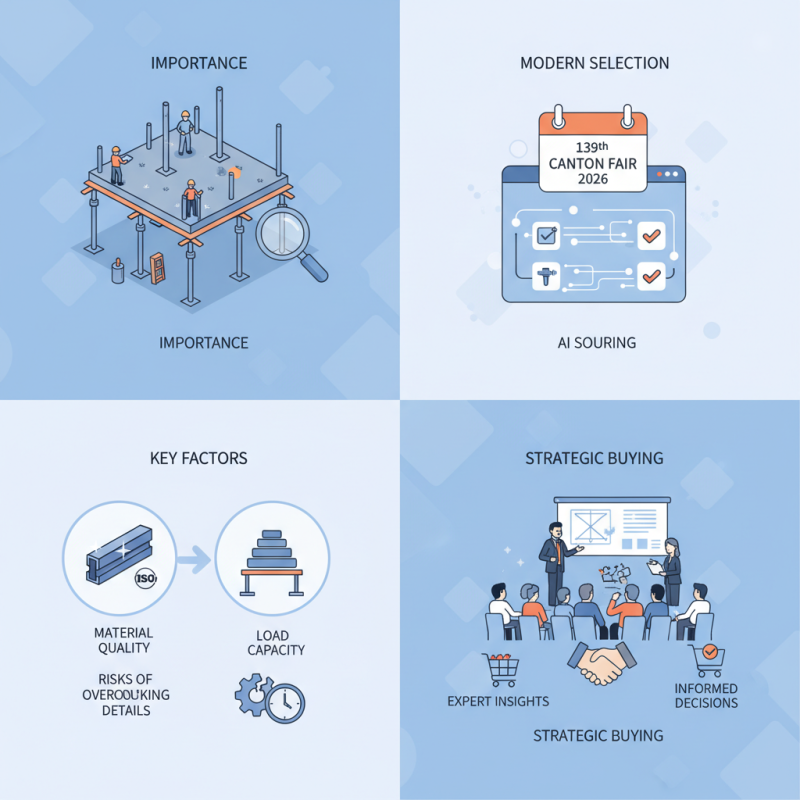
Choosing the right formwork steel prop is crucial for construction projects. These props support formwork systems and contribute to overall safety and efficiency. According to industry reports, the global formwork market is expected to reach USD 6.2 billion by 2026, driven by rising demand for infrastructure development.
At the 139th Canton Fair in 2026, attendees will find a diverse range of suppliers. With the introduction of AI features, sourcing has become more efficient. Buyers can easily filter suppliers based on certifications like ISO and CE. This innovation may simplify the procurement process, yet it raises questions about reliance on technology.
Selecting the proper formwork steel prop involves understanding material quality and load capacity. Many buyers overlook these details, which can lead to project delays. By attending the fair, businesses can gain insights from experts and ensure informed decisions in their purchases.
Factors to Consider When Selecting Steel Props for Formwork
Choosing the right steel props for formwork is crucial. Several factors influence this decision. You must evaluate load capacity, height adjustment range, and materials used in construction. These elements ensure safety and efficiency on-site.
Consider the environment where the props will be used. Harsh weather conditions require robust and durable materials. Steel props should withstand corrosion. Coatings can help, but their effectiveness varies. Keep this in mind while selecting.
Tips: Always check for the reliability of the supplier. Some may promise more than they deliver. A warranty can indicate quality. Verify if the props meet local safety standards. This is essential for legal compliance.
Remember to evaluate the cost but do not compromise on safety. A lower price can often mean lower quality. Pay attention to details. Design flaws or weak connections can lead to accidents. Test samples before making a bulk purchase if possible.
Types of Steel Props Available at the Canton Fair
When attending the 139th Canton Fair, it's essential to understand the different types of steel props available. Steel props are crucial in construction and formwork applications. They provide support for structures during the building process. It's not just about choosing any steel prop; you need the right one.
There are several types of steel props you may encounter. Adjustable props are common, allowing you to modify their height easily. Some are telescopic, and they can extend or contract as needed. Others may feature fixed lengths, which can be suitable for specific applications. Each type serves a particular purpose, so take time to evaluate your needs.
Choosing the right steel prop requires careful consideration. Ensure they meet your safety standards. Look for signs of quality, like the material thickness and welding integrity. You may notice some props might not seem as sturdy as they should. Pay attention to these details. If a design looks flawed, it could compromise safety on site. It’s crucial to reflect on these factors before making any purchase.
Quality Standards to Look for in Formwork Steel Props
When attending the 139th Canton Fair, understanding the quality standards for formwork steel props is crucial. Several industry reports highlight the importance of material strength and load-bearing capacity. Steel props should meet at least 50% of the global standards in load-bearing efficiency. A minimum yield strength of 250 MPa is often recommended, ensuring safety and stability on construction sites.
Look for certifications like ISO 9001 for quality management systems. This certification indicates that the manufacturer upholds quality in every production phase. Be wary of props that lack these certifications, as they may compromise safety. Inspect the welding joints too; poor welding can lead to structural failures, a risk you cannot afford.
Tip: When selecting props, check for detailed specifications. This ensures you understand the load limits and usability. Remember, understanding these standards can save lives and costs in the long run.
Another important aspect is the finishing. Proper galvanization protects against rust. Rust can weaken the structure, posing safety hazards. Ensure the props have a minimum zinc coating thickness of 85 microns. This detail is often overlooked but critical. A well-made prop lasts longer and performs better.
How to Choose Formwork Steel Props at the 139th Canton Fair? - Quality Standards to Look for in Formwork Steel Props
| Dimension | Material | Weight Capacity (tons) | Adjustable Height (m) | Surface Treatment |
| 1.5m x 0.15m | Steel | 5 | 1.6 - 2.5 | Galvanized |
| 2.0m x 0.15m | Steel | 8 | 1.9 - 3.0 | Powder Coated |
| 2.5m x 0.15m | Steel | 10 | 2.2 - 3.5 | Epoxy Coated |
| 3.0m x 0.15m | Steel | 12 | 2.5 - 4.0 | Zinc Coated |
Comparative Analysis of Price and Performance for Steel Props
Choosing formwork steel props at trade fairs like the Canton Fair can be a daunting task. A comparative analysis of price and performance is essential. Steel props serve as crucial support structures during construction, so understanding their quality is vital.
When evaluating options, consider the weight capacity of each prop. Some may look affordable but lack strength. Conversely, higher-priced props often deliver better durability and safety. Pay attention to the materials used. A strong, corrosion-resistant steel will greatly enhance longevity.
Don't forget to compare the ease of use. Some props are heavier, making them cumbersome. You could end up with a reliable but difficult product. In this sense, reflect on your specific needs. Determine the right balance between cost and performance before making a decision.
Best Practices for Evaluating Suppliers and Manufacturers at Trade Shows
Attending the 139th Canton Fair is an excellent opportunity to assess potential suppliers of formwork steel props. Evaluating manufacturers can be challenging, especially with many options available. Start by observing the quality of their exhibits. Look closer at the formwork systems they present. Are the props structurally sound? Do they feature innovative designs?
Engaging with manufacturers is crucial. Ask specific questions about materials and production processes. Listen to their responses. Are they knowledgeable? Be cautious if a vendor avoids detailed information. Also, check their certification. Valid certifications indicate reliability and adherence to safety standards.
Take notes during conversations. This practice helps in comparing suppliers later. Pay attention to after-sales support and warranty terms. Sometimes, an appealing price hides poor post-purchase service. Trust your instincts; if something feels off, it's wise to dig deeper. Focus on building relationships rather than immediate sales. Good partnerships develop over time, ensuring quality and consistency.

 Questions? Give Us A Call!