
Choosing a top Aluminum Composite Panel Manufacturer in China requires more than comparing prices or polished factory photographs. It requires evidence.
According to Grand View Research’s Aluminum Composite Panels Market Report, demand is linked to lightweight façades, commercial construction, renovation, and modern architectural design. These trends create opportunities, but they also increase quality expectations. The International Aluminium Institute reported global primary aluminium production exceeding 70 million tonnes in 2023. This scale supports material availability, yet aluminium quality still varies between suppliers. A reliable manufacturer should disclose alloy grades, panel thickness, coating systems, and production tolerances. It should also provide traceable inspection records for each shipment.
Fire performance deserves close attention. Reports from the European Aluminium Association emphasize responsible aluminium use, recycling, and verified product performance. However, aluminium skins do not automatically make a panel fire-safe. The core composition matters greatly. Independent testing should confirm relevant fire classifications, bonding strength, weather resistance, and dimensional stability. Look for recognized testing under standards such as EN 13501-1, ASTM E84, or equivalent project requirements. Certification alone is not enough.
Real experience appears in small details. Factory staff should explain how panels are stored, cut, protected, and packed. Sample edges should remain flat, clean, and firmly bonded. A serious Aluminum Composite Panel Manufacturer will discuss limitations, not only advantages. That honesty matters. Some product claims remain difficult to verify without third-party reports, site references, and consistent batch records. Therefore, this guide evaluates Chinese manufacturers through technical documentation, manufacturing capability, project experience, after-sales support, and transparent quality control. The strongest choice is not always the largest factory. It is the supplier that can repeatedly deliver safe, consistent, and suitable panels.
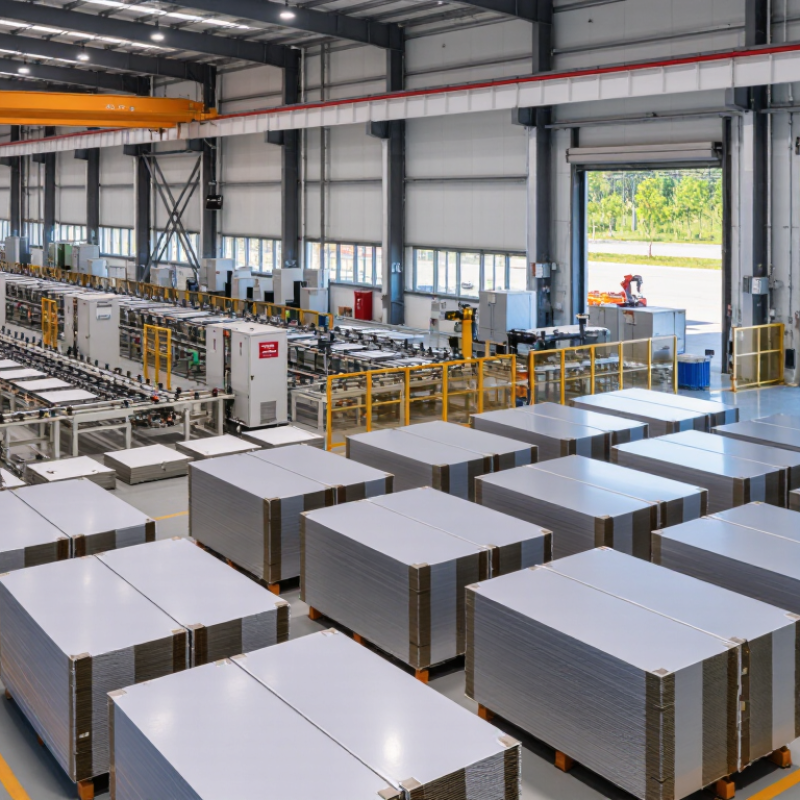
An aluminum composite panel manufacturer is a company that designs, produces, tests, and supplies lightweight cladding panels. These panels usually contain two thin aluminum skins bonded to a mineral or polymer core. The manufacturer controls the process from coil preparation to cutting, coating, and protective film application. That control matters.
In China, an experienced manufacturer often operates a complete production line rather than purchasing unfinished panels. Technicians check aluminum thickness, coating adhesion, color consistency, flatness, and core density. They may use laboratory tests for peel strength, fire performance, weather resistance, and dimensional stability. A reliable factory also keeps batch records and provides clear technical data for architects, contractors, and distributors. Factory experience helps solve practical problems, such as edge curling after cutting or surface scratches during transport.
Choosing a top manufacturer requires more than comparing prices or polished websites. Buyers should inspect samples, ask about production capacity, review quality certificates, and confirm whether testing matches the intended building use. Communication is also important. Can the technical team explain installation limits in plain language? Can it respond when a panel arrives with uneven color? Small details reveal professional habits.
No factory is perfect. Even a strong supplier may experience coating variation or delivery pressure. Honest communication and corrective procedures matter more than confident promises. A dependable manufacturer improves its process through documented inspections, customer feedback, and regular equipment maintenance.
| Evaluation Dimension | Typical Technical Information | Why It Matters When Selecting a Manufacturer |
|---|---|---|
| Product Definition | An aluminum composite panel is a multilayer flat sheet consisting of aluminum face sheets bonded to a polymer-based or mineral-filled core. | A qualified manufacturer should clearly identify the panel structure, core type, intended use, and applicable technical limitations. |
| Common Panel Thickness | Typical architectural panels are commonly available in approximately 3 mm, 4 mm, and 6 mm total thicknesses. | The correct thickness affects rigidity, weight, fabrication performance, wind-load behavior, and installation requirements. |
| Aluminum Skin Thickness | Common face-sheet thicknesses range from about 0.15 mm to 0.50 mm, depending on the product and application. | Thicker skins generally improve dent resistance, fabrication durability, and structural performance, subject to the design specification. |
| Core Options | Typical options include polyethylene-based cores, fire-retardant mineral-filled cores, and other project-specific core formulations. | Core selection influences fire performance, weight, impact behavior, machining characteristics, and suitability for exterior façades. |
| Standard Panel Widths | Common production widths include approximately 1,220 mm, 1,500 mm, and other made-to-order dimensions. | Available widths affect material yield, joint planning, transportation, and the number of visible seams on a façade. |
| Surface Finishes | Frequently specified finishes include polyester-coated, fluoropolymer-coated, brushed, mirror, anodized-look, and wood-look surfaces. | The coating system affects color consistency, weathering resistance, cleanability, gloss retention, and maintenance requirements. |
| Coating Quality | Important checks include coating thickness, color difference, gloss, adhesion, pencil hardness, impact resistance, and resistance to humidity or salt spray where required. | Documented coating tests help reduce premature fading, peeling, blistering, scratching, and inconsistent appearance. |
| Fire Performance | Fire behavior depends on the complete panel construction and installation system. Fire-retardant and non-combustible product categories require project-specific testing and classification. | A reliable manufacturer should provide valid fire-test reports for the exact panel structure, thickness, core, and intended market. |
| Dimensional Tolerances | Quality control normally covers length, width, thickness, squareness, flatness, and edge straightness according to the agreed product specification. | Tight and consistently measured tolerances support accurate cutting, routing, folding, joint alignment, and installation. |
| Manufacturing Process | A typical process includes aluminum preparation, coil coating, core extrusion or lamination, thermal bonding, panel trimming, surface protection, and final inspection. | Controlled production stages help maintain bonding strength, surface uniformity, flatness, and repeatable batch quality. |
| Fabrication Compatibility | Panels may be cut, routed, grooved, folded, drilled, and riveted or fixed with approved systems, depending on their construction. | The manufacturer should provide machining guidance, minimum bending radii, fixing recommendations, and compatible accessory details. |
| Typical Applications | Applications include building façades, canopies, column covers, interior wall panels, signage, shopfitting, partitions, and vehicle or industrial cladding. | Application-specific recommendations help ensure the panel meets structural, fire, weathering, and maintenance requirements. |
| Quality Documentation | Useful documentation includes technical data sheets, inspection reports, coating test results, fire classifications, certificates of conformity, and batch traceability records. | Complete documentation makes it easier to verify compliance, compare suppliers, manage inspections, and support project approvals. |
| Manufacturer Selection Indicators | Strong indicators include stable production controls, transparent specifications, sample approval procedures, export packaging, responsive technical support, and consistent delivery performance. | The best manufacturer is determined by verified compliance, product suitability, quality consistency, and service capability rather than by price alone. |
 Questions? Give Us A Call!