
Choosing the right Tri-Proof Ceiling Lights is rarely a simple brightness decision. Global buyers must consider moisture, dust, impact, temperature, installation methods, and long-term maintenance. A warehouse in Rotterdam may face cold humidity, while a food-processing site in Singapore may experience heat and frequent washing. The same fixture cannot perform equally well everywhere.
Lighting researcher Peter Boyce wrote, “The purpose of lighting is to make things visible.” That practical idea remains important. A powerful lamp can still create glare, dark corners, or uncomfortable reflections on polished floors. Good Tri-Proof Ceiling Lights should deliver even illumination across aisles, loading zones, workshops, garages, and covered outdoor areas. Small details matter. Check the IP rating, IK protection, beam distribution, color temperature, flicker performance, emergency options, and driver quality. A 4000K model may feel balanced in a warehouse, while 5000K can appear sharper and colder.
This guide reviews seven options for international purchasing teams. It compares construction, efficiency, wiring flexibility, certifications, warranty support, and expected operating conditions. Some products look impressive on paper. Their real performance may change after installation. That is worth admitting. Supplier documentation can be incomplete, and laboratory claims do not always reflect dusty ceilings or unstable power supplies. Buyers should request test reports, installation guidance, replacement-part policies, and samples before placing large orders.
The best choice is not always the brightest one. It is the fixture that remains reliable, comfortable, and serviceable in its actual environment.
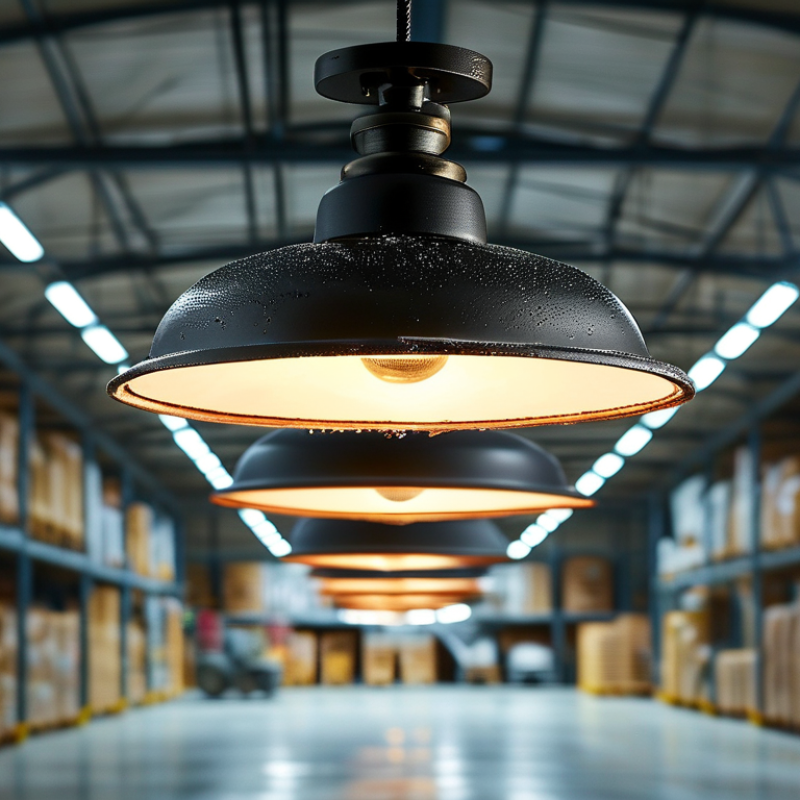
For global buyers, a high-quality tri-proof ceiling light must resist water, dust, impact, and heat. The IEC 60529 standard defines IP ratings, but IP65 alone does not prove overall quality. IP66 may suit harsher washdown areas. IEC 62262 impact testing also matters, especially in warehouses, workshops, and parking structures. The housing should use stable polycarbonate or treated aluminum, with sealed joints and corrosion-resistant hardware. Check the test conditions carefully.
Electrical performance deserves equal attention. The IEA’s Energy Efficiency 2023 report estimates that lighting uses about 15% of global electricity. Efficient tri-proof fixtures can reduce operating demand, but advertised wattage is not enough. Review delivered lumens, system efficacy, power factor, total harmonic distortion, and standby consumption. A credible photometric report should follow IES LM-79 methods. For LED lifetime, LM-80 data and TM-21 projections provide stronger evidence than a simple “50,000 hours” claim. That number can be misleading.
Thermal control is often overlooked. A fixture should maintain stable output at its stated ambient temperature, not only in a cool laboratory. Look for measured L70 performance, surge protection, flicker results, and a clear warranty process. Independent safety certification improves buyer confidence, but certificates must match the exact model. I have learned that installation details can weaken good products. Poor cable glands, trapped condensation, or incorrect mounting may cause early failure. The specification sheet should be detailed, readable, and slightly boring. That is usually a good sign.
| Rank | Recommended Light Type | Rated Power | Luminous Flux | Efficacy | CCT | CRI | Ingress Protection | Impact Rating | Input Voltage | Operating Temperature | Rated Life | Best Application |
|---|---|---|---|---|---|---|---|---|---|---|---|---|
| 1 | Compact IP65 Tri-Proof Light | 18 W | 2,340 lm | 130 lm/W | 4,000 K | ≥80 | IP65 | IK08 | 100–277 V AC | −20 to 45°C | 50,000 h | Small workshops, corridors and utility rooms |
| 2 | Standard 1.2 m IP66 Linear Light | 30 W | 3,900 lm | 130 lm/W | 4,000 K | ≥80 | IP66 | IK08 | 100–277 V AC | −30 to 50°C | 50,000 h | Warehouses, parking areas and workshops |
| 3 | High-Output 1.5 m IP66 Light | 40 W | 5,200 lm | 130 lm/W | 4,000 K | ≥80 | IP66 | IK08 | 100–277 V AC | −30 to 50°C | 50,000 h | Manufacturing floors and large storage spaces |
| 4 | Heavy-Duty 1.5 m Tri-Proof Light | 50 W | 6,500 lm | 130 lm/W | 5,000 K | ≥80 | IP66 | IK10 | 100–277 V AC | −30 to 50°C | 60,000 h | Food-processing support areas and industrial facilities |
| 5 | High-Ceiling 1.5 m Linear Light | 60 W | 7,800 lm | 130 lm/W | 5,000 K | ≥80 | IP66 | IK10 | 100–277 V AC | −30 to 50°C | 60,000 h | High-bay warehouses and logistics centers |
| 6 | Industrial 1.8 m Tri-Proof Light | 80 W | 10,400 lm | 130 lm/W | 5,000 K | ≥80 | IP66 | IK10 | 100–277 V AC | −30 to 50°C | 60,000 h | Large factories, distribution centers and loading bays |
| 7 | Maximum-Output 1.8 m Tri-Proof Light | 100 W | 13,000 lm | 130 lm/W | 5,000 K | ≥80 | IP66 | IK10 | 100–277 V AC | −30 to 50°C | 60,000 h | Very high ceilings, heavy industrial areas and transport facilities |
How to Compare the Seven Best Tri-Proof Ceiling Light Options
Comparing seven tri-proof ceiling lights requires more than checking wattage and price. Start with installation conditions: warehouses need dust protection, while food-processing rooms may need frequent washdowns. Look for IP65 or IP66 testing under IEC 60529, plus an IK rating for impact resistance. A higher rating is useful, but only when the test certificate matches the delivered model.
Compare useful lumens, not claimed lumens. A 40-watt fitting producing 5,200 lumens gives 130 lm/W. Check the photometric report, beam angle, color temperature, and color rendering index. The U.S. Department of Energy’s 2023 solid-state lighting report identifies over 200 lm/W as a continuing technology target. That figure is not a normal buying benchmark. It shows why efficiency claims need context. The International Energy Agency reports that lighting represents about 15% of global electricity use, making efficiency and controls financially important.
Tips: Build one table for all seven options. Record input power, delivered lumens, efficacy, IP and IK ratings, operating temperature, flicker data, warranty terms, and replacement parts. Ask for LM-80 or TM-21 evidence when long-term LED performance matters. Confirm whether the warranty covers drivers. It often does not clearly. A neat table can still mislead. I would request a sample, inspect the gasket, and photograph the terminal block before approving bulk purchase. Installation labor, emergency options, and local voltage compatibility can change the real cost.
This comparison uses anonymous fixture options and commonly published technical specifications for industrial tri-proof lights. Higher luminous efficacy means more light output per watt, while IP65 and IP66 ratings indicate protection against dust and water jets. The best choice depends on installation conditions, required brightness, impact resistance, and operating cost.
For factories, impact protection matters. An IK08 or IK10 body can withstand tools, carts, and accidental contact. Cold regions should use LEDs rated below -20°C, while hot facilities need reliable performance near 45°C or higher.
A wide-input model covering 100–277V and 220–240V supports many electrical systems. Check the actual input range, not only the product title. Frequency support should include 50 and 60Hz.
Dimming through 0–10V or DALI can reduce energy use in empty aisles. Emergency versions need verified battery duration and clear test access. High-CRI lighting helps inspection teams see surface defects, especially in food or manufacturing areas.
A neutral 4000K tone often feels balanced, but 5000K may improve detail visibility. I would still test glare before ordering. Beam angle, mounting height, surge protection, and local certification can change the real result. Specification sheets are useful, yet installation conditions sometimes expose weaknesses.
7 Best Tri-Proof Ceiling Lights for Global Buyers: Installation, Safety, and Maintenance
For global buyers, the seven strongest tri-proof choices serve different environments: IP65 linear, IP66 vapor-tight, IK08 impact-resistant, low-glare, sensor-ready, emergency-compatible, and corrosion-resistant models. IP ratings should match the installation area, not marketing claims. IEC 60598-1 requires luminaires to meet general safety and performance requirements. A qualified electrician should verify voltage, grounding, cable glands, and ceiling strength before installation. Never seal a fixture over trapped moisture. That mistake can shorten its life quickly.
Installation details matter. Leave space around the housing for heat release, even in a cold warehouse. The U.S. Department of Energy reports that LED lighting can use at least 75% less energy than incandescent lighting and last up to 25 times longer. However, poor wiring can erase those benefits. Check the driver’s input range, frequency, dimming method, and emergency-system compatibility. Use stainless hardware in coastal or chemical areas. Small details matter.
Maintenance is simple, but not optional. Isolate power before opening any fitting. Wipe the diffuser with a soft, damp cloth every few months. Avoid abrasive chemicals. Inspect gaskets, clips, discoloration, and water marks after heavy rain or washing. The International Energy Agency identifies lighting as roughly 15% of global electricity consumption, so efficient operation has measurable value. My practical concern is often overlooked: a dirty diffuser reduces useful light, while a replaced gasket may prevent a costly failure. Record inspection dates, though many teams forget.
Selecting the right tri-proof ceiling light starts with the environment, not appearance. Check dust, water, impact, temperature, and cleaning methods. IEC 60529 defines IP ratings, while IEC 62262 covers IK impact protection. IP65 may suit dusty workshops, but washdown areas often require higher protection. Confirm the complete fixture has test evidence. A housing rating alone is insufficient.
Measure required lumens from room size, mounting height, and task activity. Do not choose wattage first. The International Energy Agency’s Energy Efficiency 2023 report states that lighting uses about 15% of global electricity. Efficient LEDs can reduce this load substantially. The U.S. Department of Energy reports that LEDs use at least 75% less energy than incandescent lamps and can last up to 25 times longer. For projects, compare delivered lumens, efficacy, power factor, and warranty terms. Aim for stable performance, not impressive packaging numbers.
Color temperature affects comfort and visibility. Neutral white often suits workshops, warehouses, and parking areas. Check CRI when accurate color recognition matters. Also verify input voltage, surge protection, emergency options, dimming compatibility, and operating temperature. A cold storage room can expose weak drivers quickly. I would not approve a fixture from a datasheet alone. Request photometric files, safety certificates, ingress tests, and sample units. Small details matter. Sometimes the cheapest light becomes the costliest replacement.