Choosing the right double doors can change how a property feels, functions, and performs every day. A wide entryway welcomes visitors, frames deliveries, and brings more daylight into interior spaces. Yet appearance alone is not enough. The best option must suit the building’s structure, traffic patterns, climate, and maintenance expectations.
This guide explores 10 best double doors for homes and businesses, based on practical design and performance considerations. It compares wood, fiberglass, steel, aluminum, and glass models. Each material behaves differently under heat, moisture, impact, and frequent use. A solid oak pair may create warmth in a home, while aluminum and tempered glass may better suit a busy showroom. Small details matter. Hinges should move smoothly. Locks should feel firm. The doors should close evenly without scraping the threshold.
Measurements deserve careful attention. A beautiful pair can become frustrating when the opening lacks swing clearance. Poor installation may cause drafts, sticking, or premature hardware failure. Professional assessment is worthwhile, especially for exterior entrances and commercial spaces. Local building, fire, accessibility, and energy requirements should also be confirmed before purchase.
No door is perfect. Some options need regular sealing, while others sacrifice character for durability. This guide recognizes those trade-offs instead of treating every product as universally suitable. By examining security, insulation, weather resistance, accessibility, style, and long-term value, readers can make a more confident decision. The ideal double doors should look inviting, operate reliably, and continue performing after the first impressive installation.
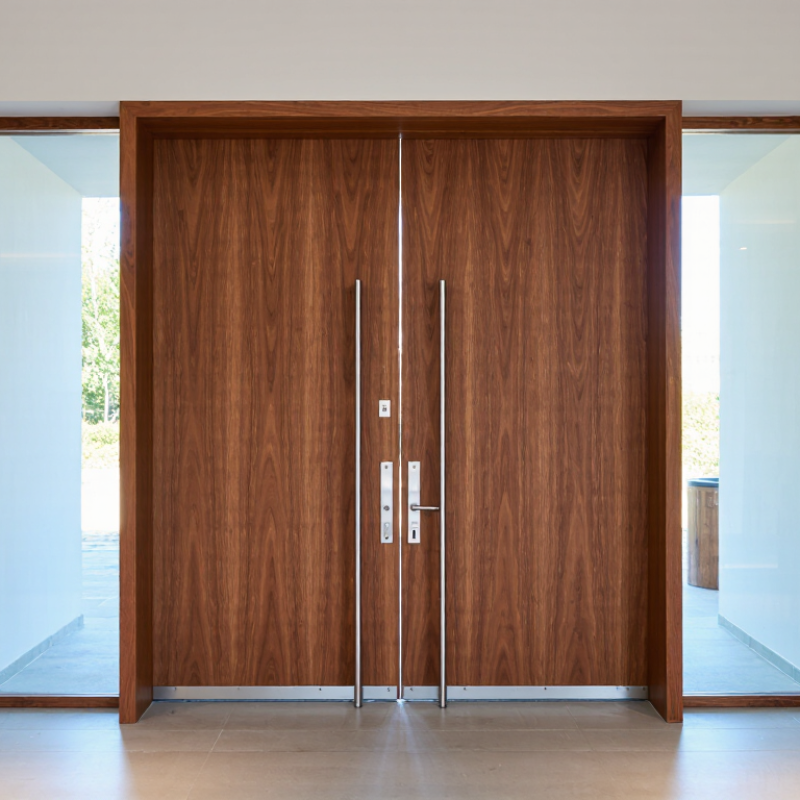
Double doors can transform both homes and commercial buildings, but the best choice depends on traffic, security, space, and weather. Residential French doors suit dining rooms, patios, and garden entrances. Their divided glass panels bring in daylight and create a classic appearance. Sliding double doors save floor space and work well beside outdoor seating areas. Solid timber doors offer warmth, while insulated composite doors provide steadier indoor temperatures. I have found that oversized handles and strong hinges matter more than decorative details.
Commercial buildings need different priorities. Aluminum-glass double doors suit offices, clinics, and retail entrances because they support frequent daily use. Steel double doors offer greater resistance for warehouses and service areas. Fire-rated sets may be required in protected corridors or exit routes, depending on local building rules. Entrance doors with low thresholds can improve accessibility, although poor drainage may cause water problems. That detail is easy to miss.
Tips: Measure the opening at several points, not just once. Check swing clearance, delivery routes, and nearby furniture. Choose laminated or tempered glazing where impact risk is higher. Ask a qualified installer to confirm frame strength, closer settings, weather seals, and local requirements. Test the doors during busy periods if possible. A beautiful entrance can become frustrating when both leaves do not align. Maintenance also matters: inspect hinges, locks, seals, and rollers every few months. Reflect on future use, too. A quiet office today may become a crowded workplace later.
Double doors can make an entrance feel wider, brighter, and more practical. In residential and commercial projects, I have found that material choice affects comfort more than appearance alone. Solid timber offers warmth and sound control, but it needs regular sealing. Steel provides strong security and slim profiles. Aluminum resists corrosion and keeps maintenance low. Fiberglass handles moisture well and can imitate painted wood.
Construction details often decide whether a door performs properly. Look for reinforced hinges, a continuous frame, adjustable weather seals, and a secure multipoint locking system. Heavy doors need correctly sized hinges and strong wall anchoring. Otherwise, the panels may sag within a few seasons. Insulated cores help reduce heat transfer, especially in offices, workshops, and homes with large entryways. Glass panels should use safety glazing and tight edge seals. Small gaps matter.
Design options include French doors, sliding double doors, folding systems, and unequal leaves for easier daily access. Full-height glass suits modern spaces, while divided lights create a more traditional character. Choose inward or outward swings according to furniture, walkways, and emergency planning. Measure the opening twice. I still see projects where attractive doors fail because drainage, threshold height, or nearby lighting was overlooked. No door is perfect. A practical choice balances security, climate, maintenance, and the way people actually use the entrance.
10 Best Double Doors for Homes and Businesses
How to Compare Security, Energy Efficiency, and Durability
The best double doors balance protection, comfort, and long service life. Start with measurable ratings, not appearance. The U.S. Department of Energy reports that windows and doors can cause 25–30% of household heating and cooling energy loss. Choose assemblies with a low U-factor for colder climates. A moderate solar heat gain coefficient can reduce unwanted summer heat. The National Fenestration Rating Council recommends comparing whole-door ratings, including glass, frames, and seals. Do not compare glass alone. It can mislead buyers.
Security requires more than a heavy panel. Check the lock type, hinge protection, frame anchoring, and forced-entry test results. ASTM F476 evaluates security performance for swinging door assemblies. European projects may reference EN 1627 resistance classes. For durability, review testing under AAMA/WDMA/CSA 101 standards. These evaluations consider air leakage, water penetration, structural pressure, and operating cycles. Poor installation can defeat excellent testing. That detail is often underestimated.
Tips: Request the complete performance label before buying. Inspect the meeting stile for daylight. Ask how many operating cycles the hinges and hardware survived. Verify weather seals at the threshold. A door that closes smoothly today may sag later, especially when panels are wide or glass-heavy. No rating replaces careful installation. I would also leave room for honest uncertainty; published laboratory results cannot perfectly predict every coastal, humid, or high-traffic site.
This comparison uses a 1–10 index derived from common construction characteristics: lock and frame strength for security, insulation and thermal-break performance for energy efficiency, and resistance to weathering and wear for durability. Actual performance depends on installation, glazing, hardware, climate, and applicable building standards.
10 Best Double Doors for Homes and Businesses
Selecting double doors depends on how a building works every day. For homes, timber doors create warmth, while insulated steel doors improve security and weather resistance. Glass double doors suit bright entrances, offices, and showrooms. Aluminum frames are lighter and need little maintenance. For busy shops, impact-resistant doors can handle repeated use. Sound-rated doors help conference rooms, clinics, and apartment buildings stay quieter. Fire-rated doors may protect escape routes, but only certified systems should be specified. Their frames, hinges, closers, and labels must match the required rating.
Warehouses and service areas often need wide steel doors with durable hinges. Louvered doors can improve airflow in utility rooms. For accessible entrances, check the clear opening, threshold height, and opening force. Commercial entrances also need reliable panic hardware where local requirements demand it. Measure the wall opening carefully, not just the door slab. A small mistake can create drafts, rubbing, or expensive alterations. I once underestimated delivery traffic in a busy entrance design. The chosen door looked suitable, but its hardware wore faster than expected.
Tips: Match the door to traffic, climate, privacy, and maintenance capacity. Request documented performance ratings before ordering. Inspect hinge alignment and seals during installation. Avoid choosing only by appearance. A beautiful door may perform poorly in rain or constant use. Review drainage, glazing safety, and replacement-part availability with the installer. Door schedules can become complicated, and they are not always perfect. Recheck every measurement before fabrication.
| Rank | Double Door Type | Typical Opening Size | Common Materials | Recommended Building Use | Key Advantages | Main Limitations | Security and Performance Considerations | Overall Suitability |
|---|---|---|---|---|---|---|---|---|
| 1 | Insulated Exterior Hinged Double Doors | 60–72 in. wide × 80–96 in. high | Fiberglass, insulated steel, solid wood, or engineered wood | Main entrances, villas, offices, and low-rise commercial buildings | Strong weather protection, broad entry clearance, good design flexibility, and compatibility with multipoint locks | Requires swing clearance; exposed hinges and thresholds need proper installation and maintenance | Choose insulated cores, weatherstripping, adjustable thresholds, laminated glass, and tested exterior locking hardware | Excellent all-rounder |
| 2 | Traditional French Double Doors | 48–72 in. wide × 80–96 in. high | Wood, engineered wood, fiberglass, or aluminum-clad wood | Living rooms, dining rooms, studies, reception rooms, and boutique offices | Provides natural light, a symmetrical appearance, and a wide opening without a large fixed panel | Usually has less thermal performance than solid insulated doors; multiple glass panels require careful cleaning | Use insulated glazing, durable astragal seals, safety glazing where required, and a properly secured inactive leaf | Best for appearance |
| 3 | Double Patio Swing Doors | 60–72 in. wide × 80–96 in. high | Vinyl, fiberglass, aluminum, or wood with insulated glass | Kitchens, dining areas, gardens, balconies, and restaurant patios | Connects indoor and outdoor areas while offering a conventional hinged-door feel and good ventilation options | Needs interior or exterior swing space and can be affected by wind if not fitted with suitable door stops | Look for low-E insulated glass, multipoint locking, corrosion-resistant hardware, and a weather-resistant sill | Best for patios |
| 4 | Center-Hinged Bi-Fold Double Doors | 48–96 in. wide × 80–96 in. high | Aluminum, timber, composite, or uPVC frames with glass panels | Modern homes, event spaces, cafés, showrooms, and flexible meeting areas | Folds to the sides, creating a large clear opening with less projection into the room than swing doors | More rollers, hinges, and seals require adjustment; the folded panels still occupy wall space | Use heavy-duty tracks, anti-finger-pinch features, multipoint locks, and thermally broken frames for exterior applications | Best for wide openings |
| 5 | Double Sliding Glass Doors | 60–144 in. wide × 80–96 in. high | Aluminum, vinyl, fiberglass, or thermally broken metal frames with glass | Patios, terraces, offices, retail areas, and accessible circulation routes | Does not require swing space, supports large glazed areas, and is convenient for frequent pedestrian movement | Only one panel may open in some configurations; tracks need cleaning and the frame may provide less acoustic sealing than a hinged door | Specify tempered or laminated safety glass, anti-lift devices, robust rollers, drainage, and low-threshold options where suitable | Best for space efficiency |
| 6 | Double Barn-Style Sliding Doors | 48–96 in. wide × 80–96 in. high | Solid wood, engineered wood, steel, or composite panels | Interior rooms, studios, restaurants, offices, storage areas, and rustic-style properties | Minimal floor swing, visually distinctive, and relatively straightforward to install on a suitable supporting wall | Normally provides limited sound, smoke, and thermal sealing; wall space beside the opening must remain clear | Use anti-jump hardware, floor guides, structural backing, and a privacy latch; it is generally unsuitable where a fire-rated door assembly is required | Best for interiors |
| 7 | Dutch Double Doors | 48–72 in. wide × 80–96 in. high | Wood, fiberglass, or insulated steel | Kitchens, service counters, farmhouses, cafés, retail kiosks, and hospitality settings | Upper and lower sections can operate independently, allowing ventilation or communication while the lower section remains closed | More complex sealing and hardware; the horizontal division may reduce airtightness and privacy | Use secure top-to-bottom bolts, weather seals at the split, child-safe latches where needed, and reinforced hinges | Best for controlled ventilation |
| 8 | Fire-Rated Double Doors | 60–96 in. wide × 80–96 in. high, subject to the tested assembly | Steel, mineral-core steel, or approved fire-rated timber assemblies | Stairwells, corridors, plant rooms, warehouses, schools, hospitals, and commercial exits | Designed to resist fire and smoke for a specified period when used as a complete tested assembly | Heavier, more expensive, and less decorative; door, frame, hinges, closer, seals, and hardware must be compatible | Verify the required fire rating, smoke-control requirements, egress direction, panic hardware, self-closing devices, and local code approval | Best for life safety |
| 9 | Acoustic Double Doors | 60–72 in. wide × 80–96 in. high | Solid timber, composite cores, steel, acoustic seals, and specialized glazing where applicable | Recording rooms, conference rooms, cinemas, hotels, consultation rooms, and executive offices | Reduces sound transfer when the complete doorway is correctly sealed and installed | Acoustic performance can be weakened by gaps, door undercuts, weak frames, or unsealed adjacent walls; usually costs more | Compare tested sound ratings, use perimeter compression seals and automatic door bottoms, and coordinate the wall rating with the door rating | Best for noise control |
| 10 | Commercial Aluminum-Frame Glass Double Doors | 72–96 in. wide × 84–96 in. high | Aluminum framing with tempered, laminated, or insulated safety glass | Retail stores, office entrances, schools, clinics, public buildings, and shopping facilities | High visibility, durable operation, easy cleaning, and compatibility with access-control systems | Metal frames can conduct heat unless thermally improved; large glass surfaces require privacy and solar-control planning | Specify safety glazing, closer strength, panic or exit hardware where required, low-energy operators, and accessible thresholds | Best for high traffic |
Planning note: Actual clear opening, fire rating, accessibility, energy performance, and hardware requirements depend on the building code, door assembly, wall construction, and local climate. Confirm final specifications with the project designer or building authority.
Choosing among the 10 best double doors requires more than comparing appearance. Installation quality often decides long-term performance. A level opening, correctly sized shims, and continuous flashing help prevent water intrusion around the frame. Poor alignment can create a visible gap within months. It also increases operating force and hardware wear.
The U.S. Department of Energy reports that windows account for about 25–30% of residential heating and cooling energy use. Double doors with large glass panels can contribute similarly when glazing, seals, and frames perform poorly. Look for independently verified U-factor and solar heat gain coefficient ratings from the National Fenestration Rating Council. Low-emissivity glass, insulated cores, and compression weatherstripping usually improve comfort. However, ratings do not replace careful installation. A high-performing door installed over a damp, uneven threshold may still fail.
Tips: Confirm rough-opening measurements before ordering. Use pan flashing, backer rod, and exterior-grade sealant. Check that both leaves close evenly. Test the lock after temperature changes. Clean thresholds regularly, because grit can damage rollers and seals.
Maintenance should be scheduled, not postponed until sticking becomes obvious. Inspect hinges, pivots, sweeps, and corner seals twice yearly. ENERGY STAR guidance supports sealing air leaks and improving fenestration efficiency as practical energy-saving measures. In commercial buildings, heavier traffic demands more frequent adjustment. I have seen attractive doors lose performance because maintenance records were ignored. That is an uncomfortable lesson, but it matters: long-term value depends on small details, repeated consistently.