2026 Best Interior French Doors for Every Home
Interior French doors can change how a home feels without changing its footprint. They let daylight travel between rooms, soften the boundary between spaces, and add a sense of detail to plain walls. Yet the right choice depends on more than appearance.
This guide to the 2026 best interior French doors explores styles for different homes, from classic wood frames to clean-lined designs with glass panels. It also considers practical details that are easy to overlook: the width of the opening, the door’s swing, available wall space, and how much privacy each room needs. Clear glass can brighten a dim hallway, while frosted or textured panes may suit a bathroom or home office better. Small details matter.
When comparing french doors interior options, look closely at frame materials, glazing, hardware, and installation requirements. A pair of doors needs room to open comfortably; a beautiful design can feel awkward if it blocks a walkway or catches on nearby furniture. Measure carefully, and check the manufacturer’s specifications before choosing a size. Not always. Older homes may have uneven openings, so a standard door may need adjustments that affect the project’s cost or finish.
There is no single best design for every home. The right doors balance light, privacy, durability, and everyday use. This overview offers a practical starting point, while leaving room for personal taste—and for the occasional choice that looks better in a showroom than in a real hallway.
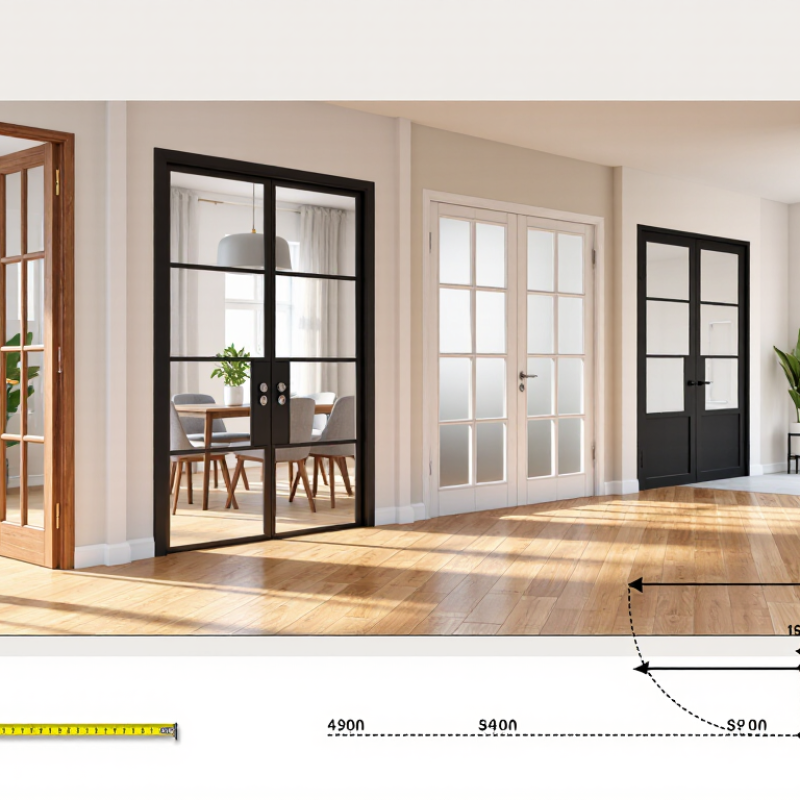
Understanding Interior French Doors and Their Key Features
Interior French doors pair two hinged panels with glass, allowing light to travel between rooms while preserving a visual boundary. Their value depends on more than appearance. Check the swing direction, panel width, frame depth, glazing, and hardware before choosing a set. In a narrow hallway, two panels can collide with furniture. A single active panel may work better. A detail easily missed.
Glass options change privacy and light. Clear panes keep sightlines open; textured or frosted glass softens views without making a room feel closed. For accessible routes, the U.S. Access Board’s ADA Standards specify at least 32 inches of clear opening width when a door is open 90 degrees. Measure the usable opening, not just the framed size. Houzz’s 2024 U.S. Houzz & Home Study reported that 54% of surveyed homeowners renovated in 2023, a reminder that door choices often sit within larger projects. The survey is not specific to French doors, though. That distinction matters.
Look for solid, even edges, smooth hinge movement, and glazing suited to the room’s use. In a home office, sound control may matter more than maximum transparency; ask suppliers for tested acoustic ratings rather than relying on vague “soundproof” claims. Confirm the floor clearance with a sample or careful measurement. Small gaps show. A beautiful door can still feel awkward if its handles catch, its panels rattle, or its swing interrupts daily traffic.
Comparing French Door Styles, Configurations, and Materials
Interior French doors can make a hallway feel brighter, but style should suit the room’s daily use. Clear glass keeps sightlines open between a kitchen and dining area. Frosted or textured glass softens views where privacy matters, such as a home office. Divided panes add a traditional look, though their grids can collect dust. Sometimes simpler is easier.
Configuration affects both circulation and furniture placement. Paired hinged doors create a generous opening, but each leaf needs room to swing. Measure the clear floor area, not just the rough opening. A single hinged door may work better in a narrow room. Pocket doors save swing space, but installation requires a suitable wall cavity and careful planning around wiring and switches. I would not choose one from appearance alone.
Material changes the feel, upkeep, and price of the door. Solid wood offers warmth and can often be refinished, but it may respond to humidity. Engineered wood tends to provide steadier performance in changing indoor conditions. Glass-heavy designs bring in more light, yet they may offer less sound privacy than solid panels. Check the door’s weight, glazing, finish, and hardware together. A beautiful door that catches on a rug is still a poor fit. Measure twice.
Matching Door Designs to Room Layouts and Home Décor
Interior French doors can open a room visually without removing its boundaries. In a narrow hallway, single-leaf doors may be easier to move through than a wide pair. For a living room beside a dining area, double doors create a generous opening when both rooms are in use. Measure twice. Check the swing path, too; a beautiful door can feel awkward when it blocks a sofa or clips a table.
Match the frame to the home’s existing details. Slim, simple profiles suit contemporary rooms, while divided panes can echo traditional trim and older window styles. Clear glass shares daylight between rooms, which helps darker interiors feel brighter. Frosted or textured glass offers more privacy for a study or bedroom, though it softens the view. Light matters.
Color and hardware shape the final effect. White frames feel quiet against pale walls, while a darker finish can outline an opening in a neutral room. Use handles that feel comfortable and coordinate with nearby fixtures, but avoid matching every metal perfectly. In practice, the prettiest option is not always the easiest one to live with. Consider cleaning, child-safe clearances, and how often the doors will be used before choosing a detailed frame. A small sample viewed in morning and evening light can reveal surprises.
Assessing Glass, Privacy, Safety, and Energy Considerations
2026 Best Interior French Doors for Every Home
Interior French doors can bring daylight into a dim hallway, but glass affects privacy as much as appearance. Clear panes suit shared living areas, while frosted or textured glass softens views into bedrooms or bathrooms. Check samples in both daylight and evening light; a pane that looks private at noon may reveal silhouettes after dark. Check it at night.
Safety deserves attention, especially in busy homes. Ask whether the glass is tempered or laminated, and review the product specifications rather than relying on appearance. Tempered glass typically breaks into smaller pieces, while laminated glass is designed to stay bonded to an inner layer. Proper hinges, secure latches, and careful installation matter too. A beautiful door that catches on a rug is not a good choice.
Energy performance depends on where the doors sit. Interior French doors may help separate a warm room from a cooler one, but they are not a substitute for an exterior-rated door. Look for close-fitting edges if drafts or sound transfer are concerns. Measure the opening, including floor clearance and swing space, before ordering. I once underestimated how much a thick rug could interfere; it is an easy detail to miss.
Choosing, Installing, and Maintaining French Doors in 2026
Choosing French doors starts with the opening, not the style. Measure width, height, and floor clearance at several points; older homes are rarely perfectly square. Decide whether one or both leaves should open, and check nearby furniture and switches. Clear glass brings light between rooms, while textured glass offers more privacy. For tight spaces, consider doors that open into the less-used room. Houzz’s 2024 U.S. Houzz & Home Study reported a $24,000 median renovation spend for 2023 projects. Treat that as broad context, not a door quote: glazing, hardware, and framing changes can shift costs sharply.
Installation needs careful alignment. The frame should be plumb and square, with an even gap around each leaf. A small error can make doors swing open or latch poorly. For wide or heavy doors, use suitable hinges and fasteners, and ask a qualified installer to assess the framing. The U.S. Department of Energy estimates that windows account for 25–30% of residential heating and cooling energy use. That figure concerns windows, not interior French doors; it matters when a glazed door separates a home from outdoors, where an appropriately rated assembly is important. For upkeep, wipe tracks and hinges, tighten loose screws, and clean glass with a soft cloth. Check the latch seasonally. I would not overtighten hardware; it can hide a misaligned frame rather than fix it.
2026 Best Interior French Doors for Every Home
Choosing, Installing, and Maintaining French Doors in 2026
Common interior French door pairs use two equal-width leaves. The chart shows typical nominal leaf widths and their combined pair widths; it excludes the frame, installation clearance, and rough-opening allowance. Confirm measurements and available sizes before ordering.




 Questions? Give Us A Call!