
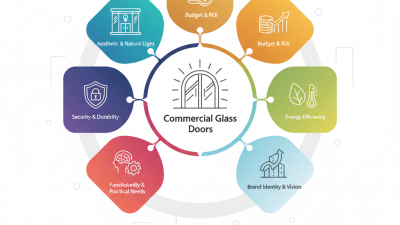
Choosing commercial glass doors is not simply a matter of selecting clear panels and polished hardware. Global buyers must evaluate safety glazing, thermal performance, accessibility, security, maintenance, and installation conditions. A door that performs well in a mild showroom may struggle in a coastal hotel or a busy airport entrance.
Door-hardware consultant Lori Greene emphasizes a practical principle: “A door is a system, not just a slab of glass.” This idea guides our review of the Top 10 Commercial Glass Doors for Global Buyers. Each option is considered as a complete assembly, including glass type, frame strength, hinges, closers, seals, handles, and access-control compatibility. Small details matter. A poorly adjusted closer can cause impact damage. Weak seals can admit dust, wind, and noise.
Performance comes first.
The selection also considers real purchasing conditions. Product availability, replacement parts, local installation skills, and technical documentation can differ widely between regions. Buyers should confirm applicable standards with qualified professionals before ordering. Specifications alone do not guarantee success.
Some rankings remain debatable. A frameless door may create a striking entrance, yet it can demand more careful alignment and cleaning. An aluminum-framed system may look less seamless, but it often offers practical durability. No single door fits every building.
This guide compares suitable solutions for offices, retail stores, hotels, healthcare facilities, and public buildings. It highlights useful strengths, possible weaknesses, and the questions buyers should ask before making a costly decision.
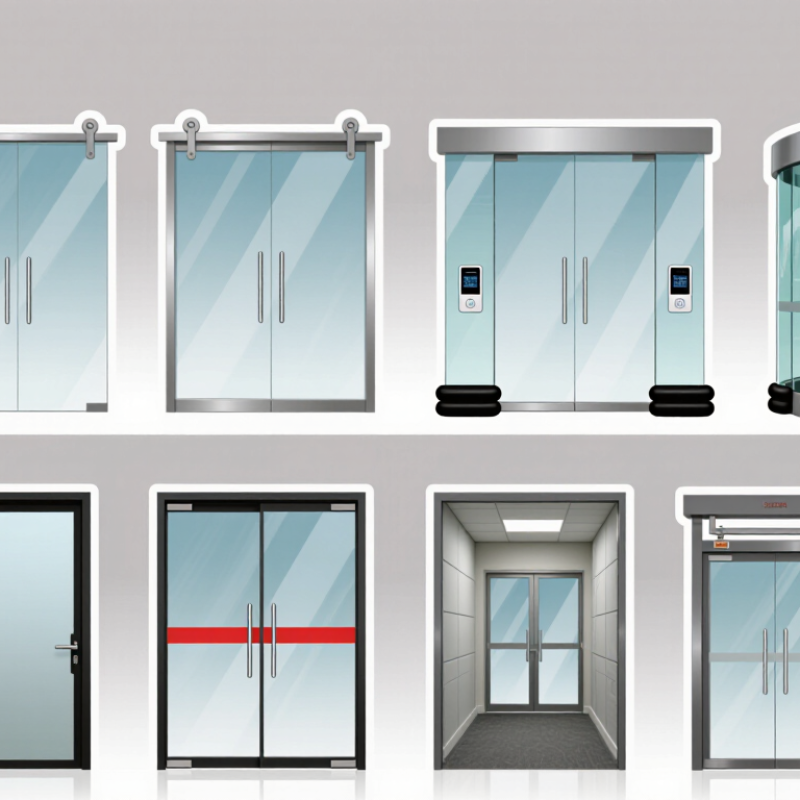
Top 10 Commercial Glass Doors for Global Buyers
What Defines a Commercial Glass Door for Global Applications?
A commercial glass door is more than a transparent entrance. It is a tested performance system, combining glass, framing, seals, hardware, sensors, and access controls. A clear pane is insufficient. Global buyers should assess thermal insulation, solar control, acoustic comfort, wind resistance, water tightness, and repeated-cycle durability.
The need is measurable. The UNEP Global Status Report for Buildings and Construction 2023 reported that buildings represented 34% of global energy demand and 37% of energy-related and process emissions in 2022. Door selection can influence heat gain, air leakage, and cooling loads, especially in large glazed entrances. Low-emissivity glass, insulated frames, and properly designed vestibules may reduce unwanted transfer. Results still depend on installation quality.
Safety and local usability define serious commercial products. Tempered or laminated safety glass, visible markings, controlled closing, and monitored sensors support safer movement. Automatic doors should align with standards such as EN 16005, while accessibility requirements vary by market. Thermal values must also match regional calculation methods. Not always.
The best specification includes tested U-values, solar heat gain data, acoustic ratings, corrosion resistance, service access, and documented cycle testing. The IEA’s 2024 buildings analysis continues to identify efficiency as a major route for reducing building energy demand. Yet catalog figures can mislead when laboratory conditions differ from busy airports, hospitals, or humid retail corridors. Buyers should request test boundaries, maintenance intervals, spare-part availability, and installation records before ranking the top ten options.
| Rank | Commercial Glass Door Type | Typical Global Application | Common Glass Configuration | Typical Door Size | Main Performance Benefit | Operation & Hardware | Important Buyer Checks |
|---|---|---|---|---|---|---|---|
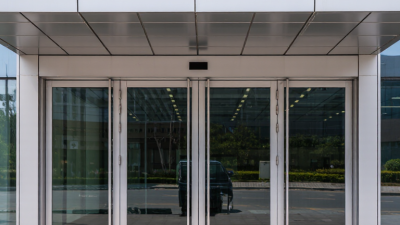
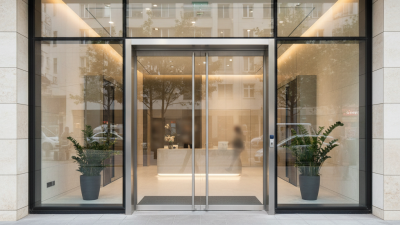
| 1 | Framed Automatic Sliding Glass Door | Retail entrances, airports, hospitals, offices, hotels and public buildings | Tempered safety glass or laminated safety glass, commonly 8–12 mm per panel | Single opening: about 900–1,500 mm wide; 2,100–2,400 mm high | Hands-free access, controlled traffic flow and improved accessibility | Motion or presence sensors with overhead operator; optional emergency breakout | Local requirements for accessible clear width, sensor safety, emergency release, power supply and weather resistance |
| 2 | Frameless Tempered Glass Swing Door | Office interiors, showrooms, restaurants, retail stores and hotel areas | 10–12 mm monolithic toughened safety glass with polished edges | About 800–1,200 mm wide; 2,000–2,400 mm high per leaf | Minimal visual obstruction, easy cleaning and strong interior aesthetics | Patch fittings, floor spring or overhead closer; single- or double-action options | Glass safety marking, door weight, hardware compatibility, edge protection and required opening direction |
| 3 | Aluminum-Framed Glass Swing Door | Commercial offices, schools, clinics, industrial administration areas and service corridors | 6–10 mm tempered glass or insulated glass units in an aluminum frame | About 800–1,200 mm wide; 2,000–2,400 mm high per leaf | Greater rigidity, perimeter protection and easier integration with walls and access control | Butt hinges, pivots or concealed closers; manual or electrically controlled | Frame finish, corrosion class, thermal performance, door closer capacity and compatible locksets |
| 4 | Automatic Telescopic Sliding Glass Door | Buildings with narrow entrance zones, hospitals, shopping centers and transit facilities | Tempered or laminated safety glass, usually 8–12 mm per sliding panel | Clear opening commonly about 1,200–2,400 mm; height 2,100–2,400 mm | Provides a wider clear opening where side space is limited | Two or more coordinated sliding leaves with sensors and programmable control | Available installation depth, traffic volume, emergency breakout, maintenance access and spare-parts support |
| 5 | Frameless Glass Pivot Door | Luxury retail, hospitality, galleries, corporate entrances and architectural interiors | 10–19 mm toughened glass or laminated safety glass | About 900–1,500 mm wide; up to approximately 3,000 mm high, subject to hardware limits | Accommodates large door leaves with a clean, high-end appearance | Offset or center pivot, floor closer, concealed lock and pull handle | Pivot load rating, deflection control, safety zones, wind exposure and required floor reinforcement |
| 6 | Laminated Acoustic Glass Door | Meeting rooms, executive offices, studios, healthcare consultation rooms and education facilities | Laminated glass with acoustic interlayer; often installed in a sealed frame system | About 800–1,200 mm wide; 2,000–2,400 mm high per leaf | Improves sound insulation and retains safer breakage behavior than monolithic glass | Framed swing, sliding or automatic configurations with perimeter seals | Tested acoustic rating of the complete door assembly, seal continuity, frame type and privacy requirements |
| 7 | Insulated Glass Entrance Door | Cold-climate offices, hotels, retail buildings and energy-conscious commercial projects | Double-glazed insulated unit, commonly two 4–6 mm panes with a sealed air or gas cavity | About 800–1,200 mm wide; 2,000–2,400 mm high per leaf | Reduces heat transfer and surface condensation compared with single glazing | Thermally improved framed swing or sliding door with insulated glazing pocket | Whole-door U-value, condensation risk, spacer type, solar-control requirements and frame thermal breaks |
| 8 | Fire-Rated Glazed Door | Stairwells, protected corridors, public buildings, hospitals and commercial separation zones | Special fire-resistant glass in a tested steel, aluminum or composite framing system | Commonly 800–1,200 mm wide; height depends on the tested assembly | Provides visibility while supporting the required fire-resistance classification | Self-closing hinged door, compatible panic hardware and certified seals | Only use a complete tested and certified assembly; verify fire rating, smoke control, hardware and local code acceptance |
| 9 | Commercial Revolving Glass Door | High-traffic hotels, office towers, shopping centers and transportation buildings | Tempered or laminated safety glass in a circular aluminum or steel enclosure | Typical diameter about 1,800–3,600 mm; overall height about 2,200–3,000 mm | Controls air movement and supports continuous two-way pedestrian flow | Manual or powered rotation with speed control, safety sensors and emergency folding features | Building footprint, evacuation strategy, accessibility route, wind load, cleaning access and service capability |
| 10 | Security Laminated Glass Door | Banks, data centers, government facilities, laboratories and controlled-access offices | Multi-layer laminated safety glass, often combined with a reinforced frame and security hardware | About 800–1,200 mm wide; 2,000–2,400 mm high per leaf | Improves resistance to impact and delayed penetration while maintaining visibility | Hinged or interlocked entrance system with card reader, electric strike or electromagnetic lock | Security classification, forced-entry testing, access-control fail mode, emergency egress and glass/frame compatibility |
Note: Dimensions, glass thicknesses and performance levels are typical commercial ranges for preliminary comparison. Final specifications must be confirmed against the project location, applicable building and safety regulations, wind exposure, traffic volume, accessibility requirements and the tested performance of the complete door assembly.
 Questions? Give Us A Call!