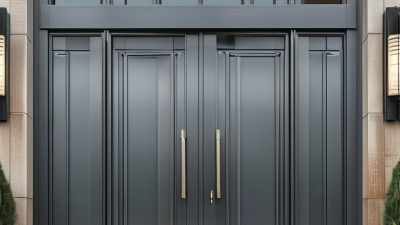
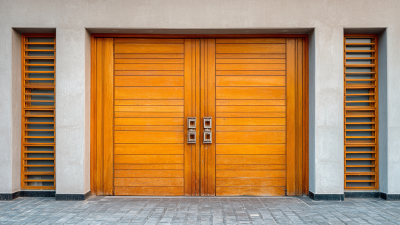
A commercial door is more than a heavy entrance used by businesses. It is part of a building’s daily safety, traffic, and energy system. In a busy bakery, the door may open hundreds of times while warm air escapes around its edges. In a warehouse, a steel door may protect equipment, employees, and inventory from impact. Each setting creates different demands.
The best commercial door depends on the building, not a popular product name. Hollow metal doors offer strength and dependable fire-rated options when correctly specified. Aluminum and glass doors provide visibility and a cleaner appearance for offices, clinics, and retail spaces. Roll-up doors suit loading bays where clearance and frequent operation matter. Insulated doors can help control temperature in workshops and storage areas.
Small details matter.
Think about traffic volume, opening size, moisture, security, and maintenance access. A door that works well in a quiet office may fail quickly beside a busy loading dock. That assumption can fail. The wrong closer, hinge, or weather seal may create drafts, noise, and premature damage. Experienced contractors usually review the frame, hardware, wall condition, and local building requirements together. Product claims should also be checked against manufacturer data and project conditions.
This guide explains what defines a commercial door and compares common types by performance, cost, durability, and use. It also considers installation quality, because even an excellent door can perform poorly when fitted carelessly. Choosing confidently requires practical evidence, not just attractive photos.

A commercial door is an entrance system designed for business, public, or industrial spaces. It usually handles heavier traffic than a residential door. Think of a grocery entrance opening hundreds of times daily, or a warehouse door exposed to carts, dust, and changing temperatures.
These doors may use steel, aluminum, glass, wood, or composite materials. The right choice depends on the building’s purpose. A steel door can provide strong impact resistance and security. A glazed aluminum door can bring daylight into an office lobby. A rolling door may suit a loading area where space is limited. Fire-rated doors require approved assemblies, compatible hardware, and proper installation. A label alone does not make the whole opening compliant.
Practical details matter. Measure the opening carefully, including wall thickness, threshold height, and available swing space. Check traffic levels, moisture, cleaning routines, and accessibility needs before selecting a design. Building officials and qualified installers should verify fire, safety, and accessibility requirements for the location. Specifications can look perfect on paper.
They can still fail in daily use. A heavy door may strain hinges when hardware is poorly adjusted. A glass entrance may feel welcoming but need visible markings for safer movement. There is no universally best commercial door. The best option fits the building, users, maintenance plan, and local requirements.eriwa

What Is a Commercial Door and Which Type Is Best?
A commercial door is built for frequent use, heavier traffic, and demanding working conditions. Residential doors usually serve fewer people and face less daily impact. In a busy office, a door may open hundreds of times each day. Its hinges, frame, closer, and lock must handle that repetition without becoming loose or unreliable.
Commercial doors also differ in materials and safety features. Steel doors can provide strong impact resistance and better fire performance when properly specified. Aluminum and glass systems may suit entrances that need visibility and natural light. Solid wood doors can offer warmth, but they may require more careful maintenance in humid or high-traffic areas. The best type depends on traffic volume, noise control, security needs, moisture, and required building ratings. A common mistake is choosing by appearance alone. That choice can become expensive.
Tips: Watch how people use the entrance before selecting a door. Measure carts, equipment, and peak traffic. Check the wall condition, frame size, and available swing space. Ask a qualified door professional to confirm hardware, closer strength, and applicable safety requirements. Experience matters here. I have seen attractive doors fail because their frames were poorly aligned or their closers were too weak. Small details matter. A practical inspection should also include threshold wear, hinge movement, and closing speed. These checks are easy to overlook, yet they often reveal problems before the door becomes unsafe or difficult to operate.
Commercial doors are chosen by traffic, security, fire performance, and operating conditions. The “best” type depends on the building’s daily behavior.
Hollow metal doors suit warehouses, service corridors, and utility rooms. They resist impacts and provide dependable security. Aluminum and glass storefront doors fit retail spaces and office entrances. They improve visibility and welcome visitors, but glass needs regular inspection. Fire-rated doors protect stairwells, corridors, and equipment areas. NFPA 80 sets installation and maintenance requirements for these assemblies. NFPA’s 2023 U.S. Fire Loss report recorded about 1.6 million fires, showing why passive fire protection cannot be treated as decoration. Rolling steel doors work well in loading bays. High-speed doors help control dust, temperature, and vehicle movement. Automatic sliding doors support busy entrances and accessibility, though sensors can fail when poorly adjusted.
Tips: Match the door to the opening’s real workload. Measure carts, forklifts, wind exposure, and peak traffic. Ask for tested fire ratings, cycle ratings, and documented maintenance records. Inspect hinges, seals, closers, and safety sensors on a planned schedule. The U.S. Energy Information Administration’s 2018 Commercial Buildings Energy Consumption Survey identified about 6 million commercial buildings, each with different operating demands. A specification that works in a quiet office may fail beside a busy loading dock. That choice can be wrong. Recheck it after observing the site for one full week.
Commercial doors are selected according to traffic volume, security requirements, weather exposure, fire protection, and operating speed. The chart compares representative full-opening times for common commercial door types.
How to read the chart: Lower values indicate faster opening. High-speed fabric and automatic sliding doors are suitable for frequent traffic, while rolling steel, sectional overhead, hollow metal, and storefront doors are commonly chosen when durability, security, or weather separation is more important than speed.
Choosing a commercial door starts with the building’s daily rhythm. A warehouse may need a fast-cycle door for frequent forklift traffic. A medical office may need a quiet, sealed door instead. The “best” type depends on use, not appearance. The U.S. Energy Information Administration’s 2018 Commercial Buildings Energy Consumption Survey counted about 5.9 million commercial buildings nationwide. That scale shows why small choices can affect large operating costs.
Energy performance deserves close attention. The U.S. Department of Energy identifies space heating as one of the largest energy uses in commercial buildings. A poorly sealed exterior door can admit drafts, dust, and moisture.
Look for insulated panels, reliable weather seals, and a suitable air-leakage rating. Glass doors can improve daylight, but they may increase heat gain without proper glazing. More glass is not always better.
Safety and maintenance are equally important. Fire-rated assemblies should be selected and installed according to NFPA 80 requirements. Impact doors should match traffic speed, opening force, and repair access. ANSI/DASMA technical guidance can help evaluate industrial door performance.
Ask about cycle ratings, replacement parts, and inspection intervals before purchasing. A low initial price can become expensive after repeated repairs. That lesson is easy to overlook. I would also question unusually high performance claims unless test methods and conditions are clearly documented. Door selection is never purely technical; staff habits, climate, clearance, and emergency access can change the result.
What Is a Commercial Door and Which Type Is Best?
Commercial doors must balance durability, security, traffic, appearance, and cost. Hollow-metal doors usually suit warehouses, schools, and service corridors. They resist impact and fire better than many lightweight alternatives. Aluminum-and-glass systems improve daylight and visibility in offices or retail entrances. Stainless steel works well in wet, hygienic areas, but its higher material cost can surprise budget owners. Wood may create a warmer appearance, yet it often needs more careful maintenance.
A 2024 Grand View Research report projects the commercial doors market to grow at about 4.6% annually through 2030. That growth reflects renovation, security upgrades, and energy concerns. However, market growth does not make every feature necessary. The U.S. Energy Information Administration’s 2018 CBECS counted roughly six million commercial buildings. Their needs vary widely. A busy hospital entrance needs automatic operators, clear safety sensors, and durable finishes. A small storage room may only need a correctly rated steel door. NFPA 80 also calls for annual inspection of fire-door assemblies. Skipping that review can weaken an otherwise strong installation.
Tips: Compare installed cost, not the leaf price alone. Include frames, hardware, closers, operators, glazing, delivery, and future repairs. Check the required fire rating and accessibility criteria before selecting materials. I have seen low bids become expensive after repeated hinge and closer failures. That is an uncomfortable lesson. The cheapest door is not always the most economical one. Ask for warranty terms, maintenance intervals, and documented testing. Then challenge your own assumptions; a premium finish may look impressive but add little value in a rough service corridor.
| Commercial Door Type | Typical Materials | Best Applications | Key Features | Security & Durability | Energy & Weather Performance | Typical Installed Cost (USD) | Maintenance Needs | Best Choice When... |
|---|---|---|---|---|---|---|---|---|
| Hollow Metal Door | Galvanized or stainless steel skins with a steel or composite core | Office buildings, schools, hospitals, warehouses, utility rooms, and service areas | High-impact construction, interchangeable hardware, optional vision panels, and fire-rated assemblies | Excellent security and impact resistance; commonly available with tested fire ratings when the complete assembly is properly specified | Moderate insulation; thermal performance depends on the core, frame, weatherstripping, and glazing | $900–$3,000 per opening; fire-rated or stainless-steel configurations may cost more | Inspect hinges, closers, locks, seals, and painted surfaces; repair corrosion or damaged edges promptly | Security, abuse resistance, and code-compliant fire performance are higher priorities than appearance |
| Aluminum-Framed Glass Door | Aluminum framing with tempered, laminated, or insulated glass | Storefronts, offices, retail entrances, lobbies, and interior corridors | High visibility, natural light, narrow or medium-width frames, and flexible glass options | Good for normal commercial traffic; laminated glass and reinforced hardware improve security | Good daylight access; insulated glass and thermally improved frames provide better energy performance than basic single glazing | $1,200–$4,000 per opening; larger storefront systems and specialty glazing cost more | Clean glass, adjust closers, check door alignment, and replace worn gaskets or weather seals | A professional appearance, visibility, and daylight are more important than maximum impact resistance |
| Fiberglass-Reinforced Plastic (FRP) Door | Fiberglass-reinforced polymer skins over a foam or composite core | Food processing, wash-down areas, laboratories, coastal facilities, and corrosive environments | Moisture resistance, corrosion resistance, smooth cleanable surfaces, and optional impact reinforcement | Good resistance to corrosion and moderate impact; security depends on the core, frame, hinges, and lockset | Generally good moisture performance; insulation varies by core and door thickness | $1,500–$4,500 per opening; hygienic hardware and special cores can increase cost | Routine cleaning; inspect fasteners, hinges, seals, and impact damage | Water, chemicals, humidity, or frequent wash-down would quickly damage less resistant materials |
| Commercial Wood Door | Veneered wood, laminate, mineral core, or composite core | Hotels, offices, schools, conference rooms, executive areas, and interior public spaces | Warm appearance, acoustic options, decorative finishes, and a wide range of hardware preparations | Good for interior traffic; more vulnerable to moisture, abuse, and edge damage than metal or FRP | Solid or composite cores can provide useful sound control; exterior use requires careful weather protection | $800–$3,500 per opening; custom veneers, acoustic construction, and fire ratings add cost | Protect from standing water, repair chipped finishes, adjust hardware, and maintain edges and seals | Design, acoustics, and a high-end interior finish are central to the project |
| Insulated Steel Door | Coated steel faces with a polyurethane, polystyrene, or mineral-fiber core | Exterior service entrances, mechanical rooms, loading areas, and climate-controlled buildings | Improved thermal performance, durable surface, optional vision panels, and multiple hardware configurations | High security and impact resistance; performance depends on gauge, reinforcement, frame, and hardware | Better thermal performance than non-insulated metal doors; perimeter seals are essential for air and water control | $1,000–$3,500 per opening; insulated frames, special finishes, and rated assemblies may cost more | Check weatherstripping, bottom sweeps, hinges, closers, and finish damage at least annually | The opening connects conditioned and unconditioned spaces and needs a balance of security and efficiency |
| Overhead Sectional Door | Steel, aluminum, or composite panels with tracks, rollers, springs, and an optional opener | Warehouses, loading docks, distribution centers, garages, and service bays | Large clear openings, manual or powered operation, window sections, and insulated panel options | Good for vehicle and equipment access; safety sensors and tested hardware are important for powered doors | Insulated panels reduce heat transfer; dock seals and perimeter seals strongly affect overall performance | $2,000–$8,000 per door; heavy-duty, high-cycle, insulated, or powered systems may exceed this range | Lubricate and inspect rollers, tracks, springs, cables, seals, and safety devices; schedule professional service for spring systems | Large equipment or vehicles must pass through the opening, and vertical lift clearance is available |
| High-Speed Roll-Up Door | Flexible reinforced fabric, aluminum, or steel curtain with a motorized drive | Manufacturing plants, cold-storage areas, clean zones, logistics facilities, and high-traffic openings | Fast cycling, automatic controls, safety sensors, compact headroom requirements, and traffic-flow management | Good operational security and productivity; curtain and guides must be selected for the traffic and wind conditions | Reduces the time an opening remains exposed; insulation and air sealing vary considerably by design | $4,000–$15,000 per opening; specialized cleanroom, freezer, or high-cycle systems cost more | Frequent inspection of sensors, guides, controls, curtain, and drive components is recommended | High traffic, temperature control, or process speed justifies a higher initial investment |
| Automatic Sliding Door | Aluminum, glass, stainless steel, or a combination of metal and glazing | Healthcare facilities, retail entrances, airports, offices, and accessible public entrances | Hands-free access, motion or presence sensors, adjustable opening speed, and accessibility support | Suitable for controlled public access; sensor layout, breakout capability, and emergency release features are important | Performance depends on glazing, seals, vestibule design, and how long the door remains open | $3,500–$12,000 per opening; automatic operators, sensors, and safety requirements drive the range | Test sensors and emergency functions, clean tracks, inspect rollers, and service the operator as required | Hands-free circulation, accessibility, and frequent pedestrian traffic are key requirements |
| Cost note: Installed-cost ranges are broad planning estimates in U.S. dollars for a typical commercial opening. Actual pricing varies with opening size, wall conditions, frame replacement, glazing, hardware, fire or accessibility requirements, electrical work, permits, location, and labor rates. A fire-rated rating applies to a complete tested door, frame, hardware, and installation assembly—not to the slab alone. | ||||||||