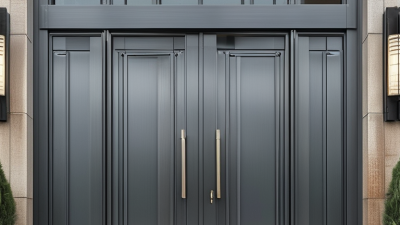
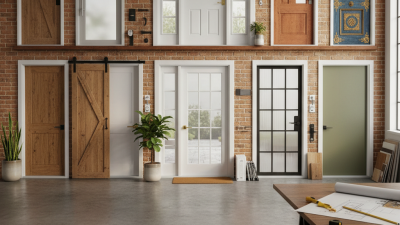
What Are the Top Types of Commercial Exterior Doors in 2026?

Commercial exterior doors do far more than mark an entrance. They manage daily traffic, weather exposure, security, accessibility, and energy loss. The right choice depends on the building’s use, climate, opening size, and maintenance capacity. Small details matter. A poorly sealed threshold can admit rain; a weak closer can turn a busy entrance into a safety concern.

The U.S. Energy Information Administration’s 2018 Commercial Buildings Energy Consumption Survey estimated 5.9 million U.S. commercial buildings, covering 97 billion square feet. That scale makes durable, well-performing building components important. Building-science expert Dr. Joseph Lstiburek emphasizes treating the building enclosure as a connected system, rather than viewing each component in isolation. A door belongs to that system: its frame, glazing, seals, hardware, and installation all affect performance. Still, no single door type suits every property.

This guide compares the leading commercial exterior doors in 2026, including aluminum-and-glass storefront systems, hollow-metal doors, automatic sliding doors, revolving doors, and fiberglass options. It considers where each performs best, what owners should inspect, and which trade-offs deserve a second look. A polished entrance is useful. So is one that keeps working after years of carts, keys, wind, and wet shoes.
What Are the Top Types of Commercial Exterior Doors in 2026?

How Commercial Exterior Doors Are Defined and Classified

How Commercial Exterior Doors Are Defined and Classified

A commercial exterior door closes an opening in a building’s outer wall and manages entry, weather exposure, and movement between indoor and outdoor spaces. Classification works best across several dimensions, not material alone. Common types include hollow-metal doors, aluminum-framed glazed doors, wood doors, and revolving or sliding systems. They may also be grouped by operation: swinging, sliding, folding, or revolving. Some categories overlap.

Performance matters just as much. Specifiers assess thermal and air performance, water resistance, durability, security, accessibility, and fire-rating needs. ASTM E283 measures air leakage through exterior windows, doors, and curtain walls; it is one useful test reference, not a complete door specification. The U.S. Energy Information Administration’s 2018 Commercial Buildings Energy Consumption Survey counted about 5.9 million commercial buildings. That scale makes consistent building-envelope decisions important, though the survey does not isolate door energy use. Field terminology can be inconsistent, too. Verify the assembly’s tested performance, not just its label.

Tips: Record the opening size, traffic level, exposure, and required hardware before comparing door types. A glass entry may improve visibility, but it can also increase heat gain. Check local project requirements and product test documentation.


Key Factors for Choosing Commercial Exterior Doors in 2026

What Are the Top Types of Commercial Exterior Doors in 2026?

Commercial exterior doors face repeated impacts, wind-driven rain, temperature swings, and daily traffic. The right choice depends less on appearance than on the building’s use. Steel doors often suit service entrances that need strength. Aluminum and glass can bring daylight to public entries, while insulated fiberglass may work well where moisture is persistent. None is perfect. A glass-heavy entrance can look inviting, yet need more cleaning and carefully selected hardware.

Check opening size, expected traffic, security needs, and weather exposure before comparing prices. A busy school or clinic may need durable hinges, closers, and a finish that tolerates scuffs. In hot or cold climates, compare the complete door assembly’s insulation and weather seals, not just its core. Confirm that the frame, threshold, and locking system work together. Local building and accessibility requirements matter too; verify them with a qualified professional. Small gaps can invite drafts and water.

Tips: On a windy day, check for air or light around the door edges. Ask installers how seals and closers are maintained. I would not choose from catalog photos alone; real site conditions are easy to underestimate.

The Main Types of Commercial Exterior Doors and Their Features

Commercial entrances need to balance daily traffic, weather, security, and appearance. The U.S. Energy Information Administration’s 2018 Commercial Buildings Energy Consumption Survey counted about 5.9 million commercial buildings. That scale makes site conditions important: a busy, glazed entrance faces different demands from a back-of-house loading door.

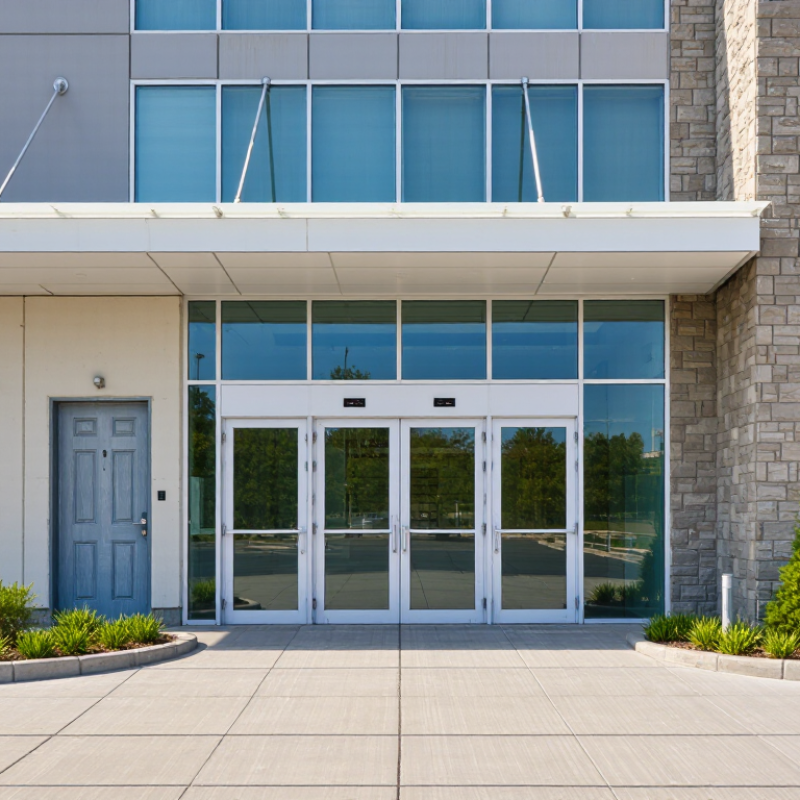
Aluminum-framed glass storefront doors suit retail and office entries where visibility matters. Their slim frames bring daylight inside, but glass can mean more heat transfer and less privacy. Insulated steel doors offer a tougher, more opaque option for service areas and exposed entrances. Fiberglass resists corrosion and can suit damp locations, though its hardware and frame still need careful selection. No door wins every job.

Automatic sliding or swing doors help keep high-traffic entrances moving. They need suitable sensors, regular maintenance, and a clear approach area. Fire-rated assemblies serve openings where the building design requires fire protection; ratings apply to the complete assembly, not just the leaf.

NFPA’s Structure Fires in Office Properties report estimated an annual average of 3,340 office-property fires from 2010 to 2014. That figure is a reminder to treat fire protection as a design requirement, not an upgrade added later.

The trade-off is easy to miss. A door can look right and still be wrong for its opening.

Typical Applications for Each Commercial Exterior Door Type

The right exterior door depends on traffic, weather exposure, security needs, and the building’s daily routine. The U.S. Energy Information Administration’s 2018 Commercial Buildings Energy Consumption Survey counted about 5.9 million commercial buildings across roughly 96 billion square feet. That range matters: a clinic entrance and a warehouse loading bay face very different demands.

Aluminum-and-glass doors suit retail storefronts and offices, where daylight and visibility help visitors find the entrance. Steel doors are common at service corridors, schools, and utility rooms; their solid leaves handle frequent use and offer practical security. Fiberglass doors can work well at damp coastal facilities or food-service back doors, where moisture is a concern. Still, hardware and frame details matter as much as the slab.

Rolling steel doors fit vehicle bays and busy loading docks because they clear the opening without swinging into traffic. Impact-rated assemblies serve exposed coastal entrances, but specifying the whole tested assembly is essential. For fire-rated openings, NFPA 80 requires annual inspection and testing of fire door assemblies, with records kept. That is easy to overlook. A door that looks sturdy may not suit its actual opening, especially when wind, carts, or delivery schedules add stress.

What Are the Top Types of Commercial Exterior Doors in 2026? – Typical Applications for Each Commercial Exterior Door Type

Door Type Typical Applications Key Advantages Important Considerations
Insulated Hollow Metal Schools, hospitals, offices, service entrances, utility rooms, and other high-traffic facilities. Strong, durable, and compatible with a wide range of commercial hardware. Insulated cores can improve thermal performance. Protect exposed steel finishes from corrosion. Fire ratings apply to tested door assemblies and must match the opening’s requirements.
Aluminum-Framed Glass Retail storefronts, office lobbies, restaurants, and entrances where visibility and natural light are priorities. Provides a bright, welcoming entrance with clear sightlines. Aluminum frames are relatively lightweight and resist rust. Thermal performance depends on the frame, glazing, and seals. Specify suitable safety glazing, security hardware, and weather protection.
Fiberglass (FRP) Coastal buildings, food-service areas, healthcare facilities, wash-down areas, and locations exposed to moisture or corrosive conditions. Resists moisture and corrosion and generally needs less finish maintenance than painted steel or wood. Check the product’s impact resistance, hardware compatibility, and suitability for the expected traffic and opening size.
Exterior-Grade Wood Hotels, offices, cultural buildings, and other public entrances where a warm, traditional appearance is desired. Offers a distinctive natural finish and can suit formal architectural designs. Requires appropriate exterior construction, weather protection, and ongoing finish maintenance. Exposure to moisture can cause deterioration.
Insulated Aluminum Panel Commercial buildings, schools, and offices that need a lightweight opaque entrance or service door. Combines aluminum’s corrosion resistance with insulated panel construction; available in finishes that coordinate with building exteriors. Compare thermal-break design, panel insulation, perimeter seals, and resistance to denting when selecting a specification.
Rolling Steel Loading docks, warehouses, parking structures, service bays, and storage openings with limited overhead clearance. Rolls into a compact coil above the opening, saves swing clearance, and can provide a robust barrier. Choose the appropriate wind, security, insulation, and weather-sealing options. A rolling door is not automatically suitable as a required pedestrian exit.
Automatic Sliding Glass Retail entrances, airports, healthcare facilities, and other high-traffic public buildings requiring convenient hands-free access. Supports smooth pedestrian flow and can improve accessibility when properly designed and maintained. Requires correctly selected sensors, safety features, controls, and maintenance. Emergency egress and power-failure behavior must meet applicable requirements.

Selection note: Confirm local building, fire, accessibility, energy, and egress requirements for the specific opening. Performance depends on the complete door assembly, including its frame, glazing, seals, hardware, and installation.

How Building Codes, Security, and Maintenance Affect Door Selection

Commercial exterior doors must satisfy local building and fire codes before appearance or price drives the choice. Under the International Building Code, required exits, accessible routes, and fire-rated openings can affect door size, swing, hardware, and glazing. Rules vary by occupancy and local amendments, so confirm the adopted code with the authority having jurisdiction. A steel door may suit a service entrance exposed to frequent impacts; a glazed aluminum entrance can improve visibility but needs suitable safety glazing and secure hardware.

Fire protection deserves careful attention. NFPA’s 2024 report, Fire Loss in the United States During 2023, estimated 1.39 million reported fires nationwide. That total includes many building types, but it underscores why rated openings must remain functional. NFPA 80 calls for fire door assemblies to be inspected and tested at least annually. Check that each door closes and latches without obstruction. Small defects matter.

Security and maintenance shape the final choice. A reinforced steel assembly may help resist forced entry, while access-control hardware can create new inspection needs. Salt air, wind-driven rain, and freeze-thaw cycles can corrode hinges or swell frames. Specify finishes and seals for the actual exposure, then plan routine checks for closers, locks, thresholds, and weatherstripping. A durable door can still fail early. I would not treat “low maintenance” as “no maintenance.”

Questions? Give Us A Call!